God or Self – Where is Your Focus?

I know that many of you have been traveling this summer. You may have just arrived back in the UAE or perhaps you are still in a state of flux somewhere in the world. That is the nature of the Dubai expatriate life in the throes of the desert heat. For me, there is one aspect of expatriate summers that I really love, and that is to hear the word of God preached wherever I happen to be. Like me, many of you may have two churches you call home. This week I was in Houston, Texas and my pastor there told a funny story that I’d like to share with you.

Ghirardelli’s in San Francisco, CA. USA
http://www.ghirardelli.com

He made a resolution this year to only eat sweets on the weekends. I admire his courage, most of us would be doomed from the start. He had the good fortune this summer to visit Ghirardelli Square, the home of Ghirardelli Chocolate in San Francisco, California. He had the bad fortune to comment in a previous sermon that he enjoyed three of their fabulous ice cream sundaes while there. Be careful what you say in public! One astute member of the congregation managed to point out to him later that perhaps he had broken his sweets commitment, as his itinerary seemed to only allow for two of those delicious delights. At this moment, he knowingly looked out at the congregation and said, “Some people like to play stump the pastor”. Don’t you just love people who point out your shortcomings? Pastors especially do, unfortunately they’re expected to be perfect. At first he pleaded the fifth, then he eventually confessed. “You caught me”, he said.  His story is a tongue in cheek example of our more serious walk of faith. The point being that sheer willpower is never enough to avoid the desires of the flesh. Depending on self is a risky business because…well, we’re selfish by nature. He went on to describe his evolving relationship with God. Saved at 16 years of age, he looked at the years before his salvation as “living just for me”. Then the next 10 or so… “pleading to God just for me”. Finally, he realized his life needed to be “me pleading to God just for God”.  I think we can all recognize the cycle. It is just so tough to turn our focus from self to God. We’re nothing if not good at self-preservation.

Irrisistable…even for the strongest will.

This Friday, on the other side of the world at Fellowship of the Emirates, we will also be learning about the difficulty in turning from self. In our continuing study of the Judges we encounter Samson and the Philistines in the final episode of Israel’s oppression and deliverance during those dark days. Samson’s birth and Nazirite[1] status was ordained by The Angel of the Lord and foretold to his mother in Judges 13, along with his mission to defeat the Philistines. From his birth God blessed him with an extraordinary amount of vigor and strength and the presence of the Holy Spirit for the purpose of delivering God’s people from Philistine oppression. Yet Samson, with all his natural ability and potential, was continually ensnared by his lack of self-control. In particular, his wanton disregard for Israelite law, the God ordained restrictions of his Nazirite vow, his lust for women and his flashes of uncontrolled rage. Samson was unable to turn his focus away from himself and towards God. As a result, he misused his gifts and his calling.
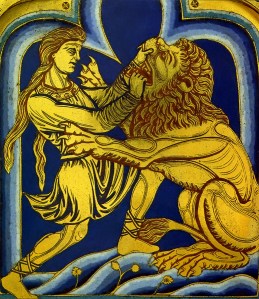
Samson and the Lion by Nicholas of Verdun, 1181
http://freechristimages.org/biblestories/story_of_samson.htm

There is a silver lining in this dark cloud of missed opportunity. No matter how badly Samson missed the mark, the grace of God still worked through his weaknesses. Ultimately Israel was spared from Philistine annihilation.

“…as in the previous deliverer cycles, if anything positive comes of Samson’s life, it is due to the gracious intervention of Yahweh. The man whose birth had promised so much is a disappointment. Nevertheless, ironically, by the free exercise of his own immoral will, Samson serves as an agent of the Lord’s ethical will…”[2] [3]

Studying Samson caused me to reflect on my own life. I communicate with others through the written word. But, I’m also very prone to feelings of inadequacy. Do you see the dilemma? If I focus on myself, my feelings of inadequacy overrun my ability to communicate effectively – and I misuse my gift. If I’m focused on God, then my attention turns away from my inadequacy and towards dependence on my Lord and Savior – and my written expressions bear the evidence.

I encourage you to study the story of Samson this week, and take some time to think about your God-given abilities and your weaknesses. Rest assured, we all have both. Ask yourself, “Am I self-focused or God-focused?” Be encouraged by the words of Paul, “… Therefore, so that I would not exalt myself, a thorn in the flesh was given to me, a messenger of Satan to torment me so I would not exalt myself. Concerning this, I pleaded with the Lord three times to take it away from me. But He said to me, “My grace is sufficient for you, for power is perfected in weakness.” Therefore, I will most gladly boast all the more about my weaknesses, so that Christ’s power may reside in me. So I take pleasure in weaknesses, insults, catastrophes, persecutions, and in pressures, because of Christ. For when I am weak, then I am strong.” (2 Corinthians 12:7–10, HCSB)

2 Corinthians 12:7-10
http://www.zazzle.com


[1] According to the Israelite Law of the Nazirite, preserved in Num 6:1–8, a person under the Nazirite committed himself to three abstentions: (1) from wine or any other intoxicating drink; (2) from having his hair cut; (3) from contact with a corpse. Block, D. I. (1999). Vol. 6: Judges, Ruth. The New American Commentary (403). Nashville: Broadman & Holman Publishers.

[2] Cf. Klein, Triumph of Irony, 118.

[3] Block, D. I. (1999). Vol. 6: Judges, Ruth. The New American Commentary (471–472). Nashville: Broadman & Holman Publishers.


Posted in Devotional Essays | Tagged , , , , , , , , , , , | Leave a comment

Finishing Well

Do you have an Emergency Room God?

My first bible teacher had a saying that profoundly impacted me in the early years of my Christian life.  “Beware of calling on an

emergency room God”, she would say.  She explained the meaning behind her axiom: “We call on God when things get rough but once the crisis is past, we don’t think we need Him anymore.” Sound familiar? We are all vulnerable to this pattern of unfaithfulness in our spiritual lives and Scripture is full of examples of individuals who fell victim to spiritual malaise. Judges clearly teaches the national nature of Israel’s cycle of sin. God would faithfully raise a deliverer to preserve them after suffering the consequences of their disobedience and retribution. In our study of Gideon we know that he too was chosen to spare Israel. With total reliance on God, he did so. But what happens after things go well?

In Judges chapters 7 and 8, God provides Gideon with an army and charges him with conquering the Midianite kings. While in pursuit of the kings, Gideon experiences what he feels is a disrespectful and inhumane act that triggers a change in his behavior. The people of Succoth and Penuel refuse to provide his army with food because they are unsure of Gideon’s ultimate victory. In an effort to protect their own people, they are cautious with their loyalty (Judges 8:6). When Gideon’s victory is sure and Israel’s freedom secured he makes a very personal decision to exact vengeance on the citizens of Succoth and Penuel.  Success leads him to do what is right in his own eyes, putting his reliance on God at risk. And how quickly Israel forgets who is really responsible for their freedom! Gideon the hero is catapulted to celebrity like status in Israel. Although he verbally refuses their request for him to be king, in practice he illegitimately assumes the role. With 43 lbs. of looted Midianite gold he

fashions an Ephod[1] that becomes an object of worship in his hometown. Scripture records that ‘Israel prostituted itself before it and it became a snare to Gideon and his household’ (Judges 8:27). Israel enjoyed peace for 40 years as a result of Gideon’s victory but it seems to be in a half-hearted spiritual state.

“Unlike the victory over the Canaanites under the leadership of Deborah and Barak, there is no celebration of divine salvation. Only the narrator’s note of quiet. The silence of Yahweh in this chapter and the silence of human lips that should have praised him are profound.”[2]Upon his death his family was treated unkindly and the nation quickly reverted to Baal worship.

Be careful to watch where you are going

Why is it so easy for us to diminish God after He has seen us through a tough trial or handed us a victory? The Bible is replete with Christian “heroes” who have struggled to finish well (David, Solomon…. even Hezekiah). You need only read the news to see that it still prevalent today. Our free will and natural self-reliance are dominant when we are healthy, secure and prospering. If we could see into the spirit world, we might lose our confidence. For it is during these times that ‘Satan, prowls around like a roaring lion looking for someone to devour’ (1 Peter 5:8). It seems the longer we live the more prone we are to let down our guard. How can we protect ourselves against spiritual complacency? First, remember you live in a fallen state in a fallen world. There is never a time when you don’t need God (Romans 3:23). Second, develop a consistent, disciplined prayer life where you can bring everything before Him, praise Him for your victories and your trials. In this way you give God glory for all things (Proverbs 16:18). Third, stay alert. Examine your life and identify your weaknesses. This is where you are most vulnerable. Ask God for protection in these areas (1 Corinthians 10:12). Finally, remember that you are saved by grace through faith, and this is not from yourselves; it is God’s gift – not from works, so that no one can boast (Ephesians 2:8-9).

I’m inspired by Paul, one who started poorly and finished well. Praise God for His mercy and grace upon us all.

“However, I consider my life worth nothing to me; my only aim is to finish the race and complete the task the Lord Jesus has given me —the task of testifying to the good news of God’s grace.”  Acts 20:24


[1] An article of clothing worn primarily by the Israelite high priest; elsewhere it appears to be an image or some such solid object as well as an object used in divination. The Eerdman’s Bible Dictionary.

[2] Block, D. I. (1999). Vol. 6: Judges, Ruth. The New American Commentary (302). Nashville: Broadman & Holman Publishers.
Posted in Devotional Essays | Tagged , , , , , , , , | 1 Comment

A Very Human Hero

Graffiti Hero

If you pay any attention to the movie scene, you know that a new rendition of Spiderman was released this summer. By my count that’s four Hollywood movies and a Broadway musical based on the Marvel comic book series created by Stan Lee and Steve Ditko in 1963. Clearly, the story is a moneymaker. But what is it about the Spiderman character that makes him so enduring? Peter Parker is a teenager, living with his aunt and uncle after the death of his parents. He suffers from normal teenage problems like loneliness and inadequacy, even bullying at school. After he develops superpowers resulting from a radioactive spider bite, his human problems and failings remain. Peter Parker the boy drives the decisions of Spiderman the hero, and it’s a struggle. Why is Peter Parker bitten? Why is he appointed protector of New York City? No particular reason it seems. He is an unspectacular person empowered to do spectacular things. I love this quote; “As a human race, we demand images of greatness. Heroes satisfy that demand. But heroes do not simply reflect our values and beliefs; they also reconcile us to human failings and limitations.”[1] Spiderman is a very human hero.

Peter Parker the boy becomes Spiderman the superhero

As we continue our journey through Judges, we find another story of a very human hero. This time it is not a fictional character but one of the Bible’s most renowned heroes – Gideon.  By his own admission in Judges 6:15, Gideon thinks of himself as pretty ordinary. “There was nothing particularly special about Gideon; he was an ordinary young man, from an inconsequential family. And he was living through a traumatic period in Israel’s history, doing what he could to survive.[2] At the time Israel was under the thumb of the Midianites. God’s people were living in caves as their enemy continually plundered their homes and harvest. When The Angel of the Lord shows up to tap Gideon as Israel’s deliverer, he is hiding, threshing wheat in the winepress in order to avoid being discovered by his enemies. Gideon’s response to the Most High is something like, “Me? You’re kidding, right?” Even a visible manifestation of God is not enough to quell his doubts and insecurities. Gideon needs repeated reassurance, in word and in action, which the Lord patiently gives him. As the story unfolds, his timidity is transformed through the presence, empowerment and assurance of God. He becomes the valiant warrior the Lord prophesies him to be at their first meeting. Why was Gideon called by God to be the deliverer of his people? No particular reason it seems. He is an unspectacular person empowered to spectacular things.

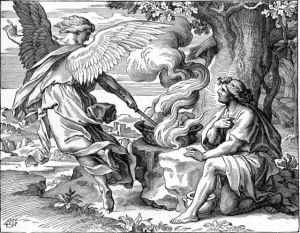
The Angel of the Lord and His very human hero – Gideon 

I often feel unspectacular in the face of trial or an insurmountable task, no matter how large or small.  Do you? I think we all need reassurance, in word and in action in order to persevere. God takes our inadequacies and empowers us to do spectacular things – just like Gideon. His story is an encouraging reminder that God enables all his children to be – very human heroes.

God is preparing His heroes. And when the opportunity comes, He can fit them into their places in a moment. And the world will wonder where they came from. – A.B. Simpson


[2] Robinson, S. J. (2006). Opening up Judges. Opening Up Commentary (35). Leominster: Day One Publications.

Posted in Devotional Essays | Tagged , , , , , , , , | 2 Comments

We All Need a Battle Partner – Judges 4-5

When I was a young Christian woman, I hardly went a day without listening to Elisabeth Elliot’s godly advice on her Gateway to Joy radio ministry. She’s just one of those people who exudes confidence and wise counsel at every turn. I remember thinking, ‘This woman must have a direct line to God!’ Her wisdom was a lifeline for me in the early years of my marriage and child rearing.

Many of you may be familiar with the story of Elisabeth and Jim Elliot, both made famous by his martyrdom on the Ecuadorian mission field in 1956. She has chronicled their life story in several of her books. After meeting and falling in love at Wheaton College, they delayed marriage for five years because Jim Elliot felt that God was directing him to go into the mission field alone. I imagine it must have been heart wrenching for him to leave this incredible woman behind. Eventually they married and served side by side in Ecuador until his death. Elisabeth Elliot was a strong, faithful, and like-minded partner for Jim Elliot in a difficult and hostile environment. She continued on with their work, ministering to the very tribe responsible for killing her husband. Now 85 years old, her books and radio ministry have been a source of teaching for millions. Elisabeth Elliot is a remarkable woman.

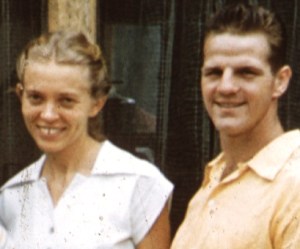
Jim and Elisabeth Elliot in Ecuador.

This week in our study of Judges we meet Deborah, another remarkable woman. “There’s a woman deliverer in Judges?” you ask. Yes, she was indeed unique and rare in patriarchal Israel. But her gender is only part of her legacy in the preservation of God’s people. I think Elisabeth Elliot says it well. “The fact that I am a woman does not make me a different kind of Christian. But the fact that I am a Christian does make me a different kind of woman.”

Deborah – Prophetess and Judge

After Ehud’s death, Israel once again falls into sin and disobedience. Soon they are under the thumb of a wicked Canaanite king and his military leader. Deborah calls forth her own military commander, Barak, and tells him that the Lord God of Israel has commanded him to take 10,000 Israelites and defeat the formidable Canaanite army that is equipped with 900 iron chariots. Barak’s response reveals the gravity of the situation and how he feels about Deborah.

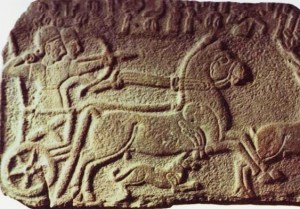
Iron Chariot relief

“I’ll go if you go…but if you’re not going, I’m not going”, he says.

Clearly, Deborah inspired confidence in Barak and he trusted her judgment. Her relationship with God made her a decisive, wise and fair judge over her people. She was a prophetess so Barak knew that God spoke to her and through her. He wisely wanted her right by his side in battle.

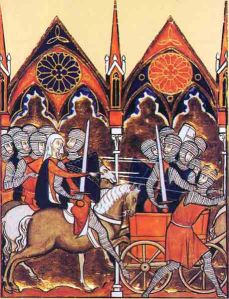
Deborah and Barak go to battle together – from the Saint Louis Psalter (c. 1252–1270).

I hope you are inspired to be a Deborah for someone in your life. Just as important, do you have a battle partner like Deborah? You know what I mean, that person whose prayers for you always seem to be answered? That person you trust completely because of their wise counsel? In addition to himself, God in His mercy gives us relationships that bolster our faith and give us courage to go to battle when we need to. In this life it seems to be quite often.

“I will surely go with you…” Deborah tells Barak in Judges 4:9

Who is the person who will say that to you?

Deborah’s Song

Posted in Devotional Essays | Tagged , , , , , , , , , | 3 Comments

The Struggle to Find Strength in Weakness

When I was in college I was a huge fan of author Robert Ludlum and his iconic character Jason Bourne. When Matt Damon assumed that role in the wildly successful Bourne trilogy movies several years ago, he brought to life a character that successfully invokes sympathy and fear at the same time. Why? Jason Bourne is a skilled assassin, with a significant handicap. He has no memory of who he is, where he came from or why he is what he is…a dangerous combination. In an effort to unravel the mystery of his life and find justice, he follows his instincts, does what he knows and uses what he has. It turns out his handicap makes him more clever, more resourceful and even more fearless. It is amazing what an assassin can do with a book, a pen, a magazine and a towel.

Matt Damon as Jason Bourne – an assassin with amnesia known for his skill with everyday objects.

As our study of Judges continues this week, we meet another highly trained assassin with a handicap. Like Jason Bourne, he is very clever, resourceful and fearless. As Israel’s cycle of sin continues in Judges 3:12-30, the nation is oppressed by an evil Moabite king. This time God chooses Ehud to deliver His people. Ehud is a Benjamite, noteworthy because Benjamin means—son of my right hand and because the Benjamites were somewhat famous for their ambidextrous skills (Judges 20:16 and 1 Chronicles 12:20).  In a bit of an ironic twist, the story quickly reveals that Ehud is left-handed. While Ehud may indeed have been an ambidextrous Benjamite, most scholars feel the original Hebrew indicates that he was “a man handicapped in his right hand”.  It is evident that his “feats of daring do” in this story are not hampered by his physical disability as he carefully plans and brazenly executes the perfect assassination of Eglon, the oppressor of God’s people.

Ehud – God’s left handed right hand man

I’m warning you, this is a violent and graphic story (interspersed with a bit of comedy!). It reads just like a scene from a Hollywood movie. You may be surprised, even shocked that there is an episode of this nature in the bible.  It is a fact of our faith that the preservation of God’s people and the road to mankind’s redemption was a bloody one, filled with sacrifice and incredible acts of bravery. It still is.  Do not turn your head from the unpleasantness of our history. Matt Chandler says in his book The Explicit Gospel, “We have to feel the weight of God’s severity, because without feeling the weight of his severity, we won’t know the weight of his kindness, and we won’t be able to worship him and him alone. Worship of him is why we were created.” I think that is a concept worthy of some serious thought on our part.

Ehud had a disability and a double edged sword

It is a struggle to find the courage to serve God when he calls us to something scary or difficult. We often don’t think we have what it takes. It is an even bigger struggle to believe we can be delivered from our current trials or even for salvation.

Israel cried out for deliverance and God enabled a disabled deliverer. Scripture is filled with similar accounts. It is a basic tenet of our faith that our weaknesses are made strong in God’s hands. Look no further than the hall of faith in Hebrews chapter 11 for an encouraging recounting of our legacy of bravery. It still happens.

Are you searching for deliverance? Is there a weakness in you that God wants to use in a powerful way? Read and be encouraged through the story of Ehud – God’s left handed right hand man.

That day Moab was made subject to Israel, and the land had peace for eighty years. Judges 3:30

I invite you to partake of further teaching on Judges on the Fellowship of the Emirates – Dubai website where audio sermons are available for download.

Posted in Devotional Essays | Tagged , , , , , , , , , , , | Leave a comment

The Struggle with Expectations

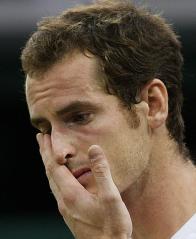
This past weekend, the eyes of the world were on the All England Club in London. The Wimbledon tennis finals were especially popular in Dubai. The reason? The large contingent of expatriates from the United Kingdom combined with the opportunity to watch one of their own in the men’s final.  The UK’s Andy Murray finally made it to the men’s championship match. I heard one commentator say, “If he wins he’s a Brit, if he loses, he’s a Scot.” You read between the lines…is that comment not fraught with pressure?

The camera loves these two. Andy Murray performed admirably under their hopeful gaze…despite his loss.

Andy Murray came onto the international tennis scene amid much anticipation and promise. After a successful beginning, his performance failed to meet expectations over time, mostly because of his inability to win a grand slam title. His resurgence in performance and popularity this year led to a chance at renewed glory. The eyes of his fans, friends, family and country (not to mention Pippa and Kate)were upon him. We watched as he battled tennis legend Roger Federer for the Gentlemen’s Singles Trophy and the title, ‘The All England Lawn Tennis Club Single Handed Championship of the World’. Yes, that’s actually what’s written on the championship cup!

The visible emotions of unmet expectations.

How in the world does one perform under that kind of scrutiny? Some shine, others shrink, most probably struggle between the two. This week our study of Judges introduces us to a man who knew all too well what it meant to shine, shrink, then shine again.

Othniel – “God is powerful”

Othniel (AHTH nih el) was the first judge to fill the gap of leadership left by Joshua as the Israelites attempted to possess their Promised Land. We are given a hint at what lies in store for Othniel in Judges 1:13 when, under Caleb’s direction, he experiences early military success on Israel’s behalf. It seems natural that he would accept the mantel of leadership over his people. But suddenly, the record of this promising and clearly capable leader goes silent. Israel falls in with the pagan Canaanite crowd and is subjugated to a Canaanite king. It is not until God’s people cry out for deliverance that we find Othniel front and center once again. And the expectations are great. Here is a man who seemed to have everything needed for victory – ability, proven performance, and a strong family heritage. In fact, as Caleb’s kinsmen by blood and by marriage, he is the last link to Israel’s former leadership legacy. This is not however, the ultimate reason for his greatness this time around.

Just like Othniel, each of us has been sovereignly placed for service and influence. Yet we often shrink under the weight of insecurity and human expectation. Do you desire a courageous faith that will enable you to use the gifts God has given you? This Friday we will learn the real meaning of Othniel’s name and what it was that enabled him to put aside crushing expectations and shine.

Never underestimate the good that one person can do who is filled with the Spirit of God and obedient to the will of God.[1]

Join us in our study on Judges at Fellowship of the Emirates by clicking here.
[1] Wiersbe, W. W. (1994). Be available. “Be” Commentary Series (22–27). Wheaton, IL: Victor Books.
Posted in Devotional Essays | Tagged , , , , , , , , | 1 Comment

The Struggle for Faithfulness

The expatriate population is full of truly remarkable people. I’m often amazed and encouraged by the stories of faith that I hear. There is one particular group that seems to bear the challenges of expat living with extra resiliency. I’m talking about our young Christian TCKs (3rd culture kids). Many of them have spent some or all of their teen years attending high school in the UAE.  Often their stories are similar. They speak of the difficulty in being uprooted from all that is familiar in their home countries and abruptly placed in a foreign culture. Pretty risky for a teenager, however most navigate the change fairly well. How? Usually they attribute their success to the strength of their family relationships – a strength that provides godly counsel, safety and security. As a result their faith often grows in the midst of a new and unfamiliar environment. Eventually these young people go back to their home countries for university and there in lies the real challenge. Suddenly, the safety nets are gone. The steady, wise counsel they’ve come to rely on is no longer readily available. With no one to fill the void, they are adrift in a sea of temptations. Living a faithful life becomes much tougher. One student told me, “When I left home for college, I really had to own my faith. My walk with Christ had to become more disciplined and personal. It was a struggle.”

Navigating the first year of college

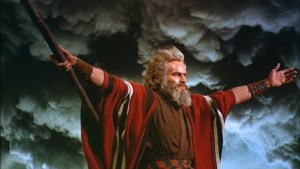
As our church in Dubai began a study of Judges last week, we learned that the Israelites faced a similar experience as they crossed the Jordan River and occupied the Promised Land. Their beloved Joshua had taken the mantle of leadership from Moses and guided this “family” as a nation according to the will of God. Under his firm leadership they faced challenges faithfully and prospered.

Charlton Heston as Moses – He passed leadership to Joshua but never entered the Promised Land. Love this movie.

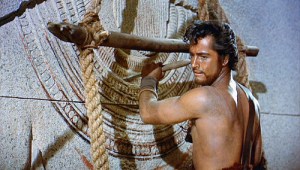
John Derek as Joshua in one of my childhood favorites, The Ten Commandments

But then, Joshua went the way of the earth. “It came about after these things that Joshua the son of Nun, the servant of the Lord, died, being one hundred and ten years old.” (Joshua 24:29)

And Scripture is clear about the kind of legacy of leadership that Joshua left behind. “Israel served the Lord all the days of Joshua and all the days of the elders who survived Joshua, and had known all the deeds of the Lord which He had done for Israel.” (Joshua 24:31)

Israel was carried along by the inertia of Joshua’s leadership for a time but eventually, with no one to fill the void they drifted into apostasy.

Samuel, the author of Judges, tells us, “In those days there was no king in Israel; every man did what was right in his own eyes.” (Judges 17:6)

When the time came for Israel to own their faith, they failed. Ultimately, Judges paints a picture of Israel’s oppression and apostasy as God’s appointed deliverers – the judges – attempted to govern and to deliver them from their enemies.

Israel’s experience during the time of the Judges is a good lesson for us all. They found out just how tough it was to follow God’s laws when there was no trusted leader to tell them what to do, even though they were in their Promised Land. Our young college students know how tough it is to remain faithful to the Lord when their support groups are gone, even though they are saved by grace. Indeed it is tough for all of us. But my friends, the Holy Spirit indwells each and every believer. Thankfully, Christ has given us everything we need for life and godliness. The challenges come in truly owning our own faith everyday in the midst of all our trials, the distractions of the world and our own natural waywardness.

Third Culture Kids headed for university

It is likely we will see a lot of ourselves in the story of God’s people as we learn valuable lessons from Judges in how to remain faithful and obedient in our walk with Christ.

After studying this part of Israel’s history I had to ask myself, “How do I want my legacy of faith to be remembered?”

Something like this?

“In those days there was no faithfulness in Shirley’s life and she did what was right in her own eyes.”

Or something like this?

“Shirley served the Lord all the days of her life and all the days of her family who survived her knew all the deeds of the Lord which He had done for her.”

I am chastened…and challenged. How about you?

Posted in Devotional Essays | Tagged , , , , , , , , , , , , | 2 Comments

Lake Memories on Father’s Day

My flight from Dubai left me jet lagged but my weariness didn’t dampen my excitement. I was back in Virginia, this time for an extended summer stay. As Jeff and I negotiated the narrow curves on route 626, the familiar silhouette of Smith Mountain came into view. No matter where I travel, Smith Mountain Lake feels most like home. This old mountain lake and I were melded together during the most impressionable years of my life. As I looked out over the water, I thought about my dad, and the reasons why this area has become such an important part of my life.

Smith Mountain today

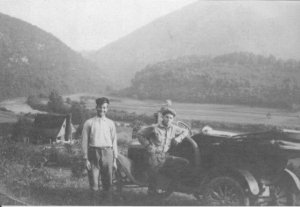
My grandfather was a Boy Scout leader, and when my father was a young boy, they hiked the falls on the Roanoke River near Smith Mountain Gorge. The lake was later formed when the Roanoke and Blackwater rivers were dammed at the gorge in 1963. My dad loved the area so when land near the lake went up for sale, he bought an acre across from the mountain. It was a beautiful piece of property. It sat atop a hill with a stunning view of the water and the old mountain—it’s rounded form a solitary remnant of the great Blue Ridge Mountains before they give way to the Piedmont.

Smith Mountain Gorge upstream before the dam. Dam Island is in the foreground.

http://forums.aaca.org/f215/period-photo-thread-274625-10.html

I remember my daddy working tirelessly on our lot to tame its wildness. He used a sickle, a shovel and an axe to clear the brush and lay a neat gravel driveway. There was a lone, tiny cedar tree he took particular care to save. It looked like the one in Charlie Brown’s Christmas. Today it towers majestically on top of the hill, a sentinel to remind me of the passing years. He planted red maples in the back and a row of pine trees along the border near the road. He carefully measured the distance between each pine, making sure it was exactly the same. They were perfectly spaced, a testament to my dad’s penchant for symmetry and order. Through his hard work and enviable green thumb, our lot was slowly transformed into a meticulously landscaped piece of real estate.

Once a Charlie Brown tree, the little cedar now towers over the landscape

The pine trees were perfectly spaced

Dad would hitch his StarCraft camper to our big green Ford Ltd Station wagon (the kind with the wood paneling on the side) and haul it and all of us to the lake on the weekends. He also had a sleek new blue and white Glastron powerboat that he kept at the dock in our development. I think he saw all of these things as necessary for recreation and to escape the pressures of his business. I know it was a lot of hard work for my mom. But for us kids it was a recipe for fun and adventure.

My dad put very few restrictions on us in our youth. My sisters and I spent hours wandering through the woods near our place. We would traverse old roadbeds that were part of farms in the area before the lake enveloped the hollows of Franklin and Pittsylvania counties. We would slip into the neighbor’s field and pick corn next to a big green water tower that stood nearby. One of my most vivid memories is snatching hard green apples from trees by the side of the road; scared to death we’d get in trouble. Then we would make sure they were worm free before subjecting ourselves to their lip puckering sourness.

The old water tower still stands

In the back of the property, my dad built us an oversized swing set made of steel pipe. He hung the seats from long pieces of heavy chain. I think we had the highest swings ever made. We would pump until it felt like we could reach the sky, then jump out and fly across the grass, trying in futility to stay on our feet.

Most of the time though, we were in the water. For hours on end we swam, even bathed and washed our hair in the lake. By summer’s end my hair would bleach white from the sun and my skin would turn brown enough to make that portion of my Native American heritage believable.

Sometimes we would take the boat and ride up to the dam where the water was really deep. Dad would say, “lets swim here, the water is warmer”. I was petrified. There were “Warning Keep Out” signs everywhere and my young imagination would envision us getting sucked up by the concrete structure in some terrible fashion. Other times we would anchor in a quiet cove to have lunch and jump in the water to cool off. Occasionally we would go on longer trips to see friends, up the Roanoke River past Hales Ford Bridge to the train trestle and then make our way back again. I loved to sit in the front of the boat with my hair flying in the wind and the warm sun on my back. My sister and I would pretend we were driving. I delighted in the speed and the noise of the boat as it powered through the water. Eventually the steady hum of the engine would hypnotize me and my eyes would start to droop. I would fall asleep on a beach towel in the floor of the boat, waking only when we slowed to dock.

Daddy was incredibly coordinated and agile. He taught himself to water ski, eventually mastering slalom skiing from the deck of the dock without getting wet. It was an amazing sight. When I was very little, I would ride piggyback while he skied. I tell you I was hanging on for dear life but I loved it and I was never afraid. It’s crazy to think about doing something like that now. He taught me to water ski when I was eight years. He put me on a tiny set of training skis, plopped me in the water and shouted, “lean back and let the boat pull you up!” I mustered my courage and did what he said. I was small, kind of the runt of my family, and so it didn’t take me long to master it.

Looking back I realize my dad had a real spirit of fun and adventure, and a bit of a wild streak. I am thankful to him for giving me such a unique experience growing up. It was the bohemian life of a “lake rat” and I treasure it. It is natural to yearn for the things we know and love from childhood. Most seek in vain but I am fortunate. I have stumbled upon it. The same philosophy of life at the lake continues with my own family. They know it well. When SML calls our name, we are “lake rats” together.

Dad

Happy Father’s Day daddy and thank you for letting me be a “lake rat”.

Posted in Blog Entries | Tagged , , , , , | 5 Comments

“To Remember” – Memorial Day

There is a place so beautiful, so serene it is hard to imagine the violence and bloodshed responsible for its creation. Though located on the Normandy coast of France, it is officially American soil and filled with American soldiers. This quiet and vast plot of land, the Normandy American Cemetery, is set atop a bluff where German guns once pounded infamous Omaha Beach below. As Memorial Day approaches I remember my visit there one year ago.

The American Cemetery is the resting place for thousands of men and women who died on the beaches and in the towns of the Normandy region of France during the D-Day invasion of World War II.  The site is a memorial to those who freed France from German occupation and facilitated the end of the war on the European front.

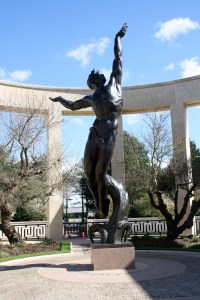
As I walked along the cross-shaped pathways of the memorial, I contemplated the rows and rows of neatly placed crosses stretching out before me, marking the graves of these brave young people. They bear the names of Americans of every ethnicity and religion. They represent all different socio-economic and educational backgrounds. The dates engraved on the marble stones indicate their age, too young to die – much too young. This sad truth is reinforced by the sculpture occupying the center of the main memorial structure. Surrounded by the semi-circular colonnade stands “The Spirit of American Youth Rising from the Waves”. Inscribed at the base is a line from the beloved Battle Hymn of the Republic.

MINE EYES HAVE SEEN THE GLORY OF THE COMING OF THE LORD

These words are paraphrased from the Synoptic Gospels (Matthew 24:30, Mark 13:26, and Luke 21:27) and refer to the Lord’s return to earth when perfect justice will preside. The circular Memorial Chapel, located in the graves area, bears an inscription that I believe captures the essence of a memorial.

THEIR GRAVES ARE THE PERMANENT AND VISIBLE SYMBOL OF THEIR HEROIC DEVOTION AND THEIR SACRIFICE IN THE COMMON CAUSE OF HUMANITY

Memorials are meant to be permanent and visible, reminding us that humanity must be defended, urging society to guard against backsliding towards mistakes of the past. The Hebrew and Greek words for “memorial” are derivatives of the phrase “to remember”.[1]  In ancient Palestine, where memorials were part of the fabric of life, the idea was much more than just recalling an event. To remember was to interact with the past through thought and reflection in a way that affected present living. Whether they were meant to educate, warn or prompt remembrance of God’s faithfulness, memorials communicated, ‘pay attention, something very important occurred here.’ This is still very true and very applicable in our world today. D.A. Carson puts it this way: “Memory plays an important role in any society. Without a memory a person loses identity, and without a history to sustain it a society and the world around it become virtually phantom. Any society that hopes to endure must become, as sociologists put it, ‘a community of memory and hope’.”[2]

For me, the American Cemetery is a powerful reminder of the tenuousness of our humanity. We live in a perpetually fallen state where evil is always present, but sometimes it rises to the forefront of our existence with unspeakable horror. The aggression, oppression and most horribly, genocide, carried out by the Third Reich against the Jewish people, prompted a worldwide crisis that almost wiped out an entire race and cost millions of lives on the battlefield.

The survivors of the Great War are slowly leaving this earth. Soon, without their voice, the American Cemetery will take on added significance as a lasting reminder of what humans will do to each other and the resulting consequences when tyranny is allowed to prevail. War is never good. However, sometimes combating tyranny requires a response that is equal in power to tyranny’s evil. The soldiers buried on the bluff overlooking their final battle field sacrificed their lives on foreign soil for freedom. Freedom was, is and always will be, costly and painful.

As the afternoon shadows deepened and our visit ended, “Taps” played while the American flag was lowered. Veterans and family members of those buried here are allowed to participate in this solemn ceremony. As I watched I was overwhelmed with emotion. I found myself anticipating the day when my eyes will see the glory of the coming of the Lord, when perfect justice reigns.

This essay is dedicated to the brave, honorable and dedicated men and women who have served and are serving in the United States Armed Forces. Thank you for my freedom.


[1] Elwell, W. A., & Comfort, P. W. (2001). Tyndale Bible dictionary. Tyndale reference library (878–879). Wheaton, Ill.: Tyndale House Publishers.

[2] Carson, D. A. (1994). New Bible commentary : 21st century edition (4th ed.) (Jos 4:1–24). Leicester, England; Downers Grove, Ill., USA: Inter-Varsity Press.
Posted in Devotional Essays | Tagged , , , , , , , | 11 Comments

Aging Rockers and My Rock of Ages

Do you ever have moments that crystalize the passage of time? Moments that catch you off guard, surprising you with intense emotion as you look back down the road of your life? Happening at the oddest times and in the strangest places, they are often triggered by a memory, a smell, a song, or a photograph. This sudden merger of past and present make you acutely, and sometimes uncomfortably aware of who you were, where you’ve been and who you have become.

I had one of those crystallizing moments recently, in the desert, at the Dubai “Sevens” rugby stadium of all places. One of the iconic bands of my youth, the Eagles, came to the emirate as part of their 40th anniversary tour.

‘Has it really been forty years’ I thought?

Yet, there they were; Glen Frey, fellow Texan Don Henley, Joe Walsh and Timothy Schmidt – all older now, calmer. I guess age has taken away a bit of that rocking stage presence they once had. I’m older and calmer too. I realize that the Eagles and I have grown older and calmer together. Their voices are still amazing, still producing that clear, unmistakable harmony, especially in Seven Bridges Road. Originally written by Stephen Young, the song’s imagery and lyrics seem to paint a picture of going home.

“There are stars in the southern sky, and if ever you decide you should go. There is a taste of time sweetened honey, down the Seven Bridges Road”

The lyrics came easy, even though it’s been decades since I listened to my old vinyls, now packed away in my closet in Houston. Yeah, I kept them.

This concert transported me back to the first time I saw the Eagles as a teenager, some thirty-five years ago. I can’t remember exactly how old I was but I must have been about seventeen. Wow, if anyone had told me where and when I would see the Eagles in concert again…well, I just wouldn’t have believed it.

I’m not particularly fond of waxing nostalgic about the days of my youth. I know I’m not alone. The thing is, nostalgia is just so emotionally unpredictable. For some, it is a source of comfort, for others, a source of pain. It can be where the mind goes when searching for release from the stresses and strains of the present day. It can also be something to avoid, a closed door to painful memories of the past. When I encounter people who are reluctant to talk about their pasts, I think this may be why. What is this mixture of joy and sadness we all feel from time to time?

My curiosity led me to research the origin and meaning of the word. The modern definition of nostalgia is, “a wistful desire to return in thought or in fact to a former time in one’s life, to one’s home or homeland, or to one’s family and friends; a sentimental yearning for the happiness of a former place or time:”[i] The term is a combination of the Greek words nostos, meaning “homecoming” and algos, meaning “pain, grief, distress”[ii] In other words, there can be pain in going home. There was a time when nostalgia, or “severe homesickness”, was even considered to be a disease. [iii] What we now know as PTSD (Post Traumatic Stress Disorder), was once referred to as Soldier’s Heart, a term coined in the American Civil War, for the suffering observed in returning soldiers as they struggled to integrate their horrifying war experience with the warm normalcy of home.[iv]

Our move to Dubai two years ago triggered nostalgic responses in one form or another in all three of our children. One said, “I try not to think about you, it’s just too painful. I can’t wait for you to get back to Texas.” Another expressed feelings of abandonment, as though her safety net had been pulled out from under her. Our youngest, having lived in Dubai for a year before moving back to the states for college, yearned for her former life. Nostalgia makes my husband feel claustrophobic, but I believe he has come to terms with that “sentimental yearning for the happiness of a former place or time”. Something about the Eagles concert inspired him to make a surprise visit back to his hometown for his mother’s birthday.


My trip to the past caused me to reflect on the twists and turns my life has taken. Thirty-five years ago I was a different person. The sign posts that mark the forks in the road of my life make me once again thankful to God for the way He guides me, even when I don’t realize it. While my past and present are intertwined, there is a clear separation between who I was and who I am. God made me somebody new, and I am eternally grateful. The Apostle Paul was no stranger to the angst of nostalgia. He was a persecutor of the early Christian church and he conspired to murder Christians. But his life was irrevocably changed on the road to Damascus. In Philippians he penned, “If anyone else thinks he has reason for confidence in the flesh, I have more: circumcised on the eighth day, of the people of Israel, of the tribe of Benjamin, A Hebrew of Hebrews; as to the law, a Pharisee; as to zeal, a persecutor of the church; as to righteousness under the law, blameless.” (Philippians 3:4-6, ESV)  Paul is an example of how to coalesce the past, present and future.  He continues, “But one thing I do: forgetting what lies behind and straining forward to what lies ahead, I press on toward the goal for the prize of the upward call of God in Christ Jesus. …let us hold true to what we have attained.” (Philippians 3: 12-16, ESV)

When aging rockers, Glen Frey and Don Henley joked during their song interludes about the “fun” they had while living on Mulholland Drive during the 70’s, I understood. I too, look back at my past with a mixture of joy and sadness, but mostly I marvel at who I have become through the Rock of Ages. It is said that we are the sum of our experiences. I guess in some ways that’s true, but I encourage you brothers and sisters, to forget what lies behind and reach for what lies ahead. Never feel you cannot become who Christ wants you to be. You may find that you are a mere shadow of who you once were. Praise God.

“Sometimes there’s a part of me, has to turn from here and go, running like a child, from these warm stars, down the Seven Bridges Road.” Stephen T. Young

Posted in Devotional Essays | Tagged , , , , , , , | 2 Comments