Worship – Papua New Guinea Style

When my husband and I moved to Papua New Guinea, our first priority was to find a church we could attend. For me, worship is the glue that holds my shifting expat life together. Worship steadies my soul when I’m changing time zones, suffering jet lag and navigating a new place to live. I find normalcy with the body of Christ in the midst of abnormal circumstances.

Based on my experience in Dubai, I thought it would be easy to find a church in Port Moresby. Dubai is a city governed by Islam and yet there were lots of churches and big congregations filled with expats. I looked on this as proof of God’s faithfulness in providing for His people, regardless of the social, religious or political climate. Papua New Guinea openly adheres to freedom of religion. But to my surprise, it took more effort than I imagined. It turns out that many of the expats in Port Moresby worship in their homes, so there’s not really an “expat” church. This puzzled me, but I kept on searching. Eventually, through the fellowship of other believers we met, we were led to a local congregation, Boroko Baptist Church.

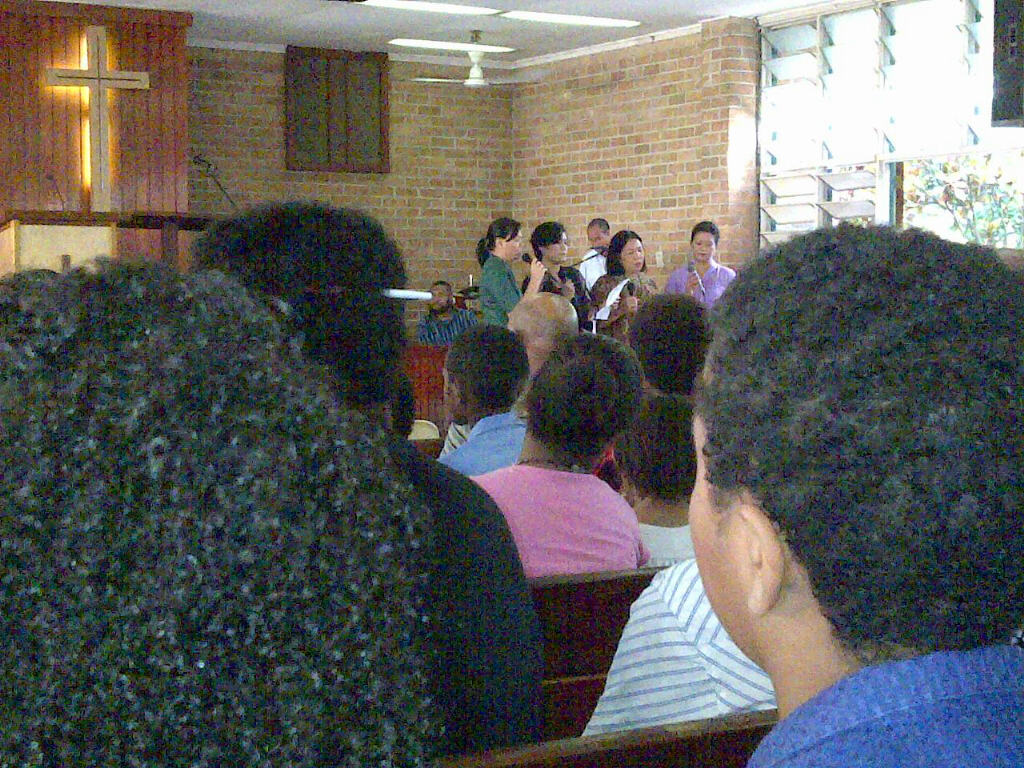
On the outside, Boroko is pretty different from most churches in America. And it’s a definite change from the hotel meeting rooms used as sanctuaries in Dubai. The church building consists of a roof with semi-open walls, jalousie windows and a concrete floor. There is no air-conditioning, only overhead fans. In the summer months it’s stifling hot, even more so when the power goes out (a fairly common occurrence in the city). I struggle with the heat and humidity in the Southern Hemisphere summer months. Being a middle-aged woman from Texas, I love an air-conditioned room with the temperature turned down low. I compensate for my discomfort by remaining very, very still. My good friend Lee comes to mind. He worked with my husband in the oilfields of Iraq. He would mentally “go to a cool place” when sitting in a searing hot armored car, in a helmet and 30 pounds of body armor. If he could do it in Iraq, then I could certainly do it in church. The gentle breeze created by the overhead fans is a welcome relief. Once the singing starts though, you can sit still no more.
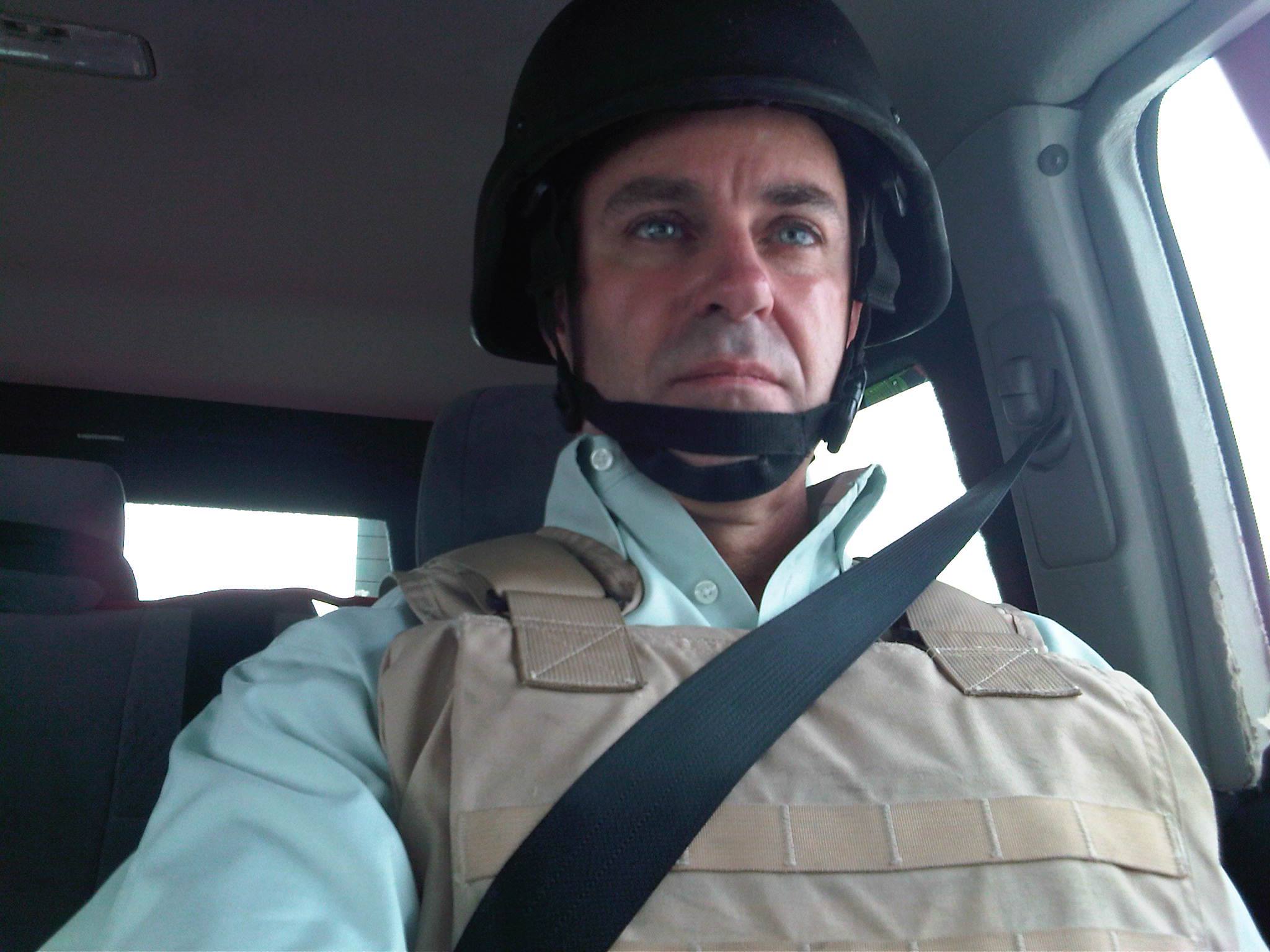
If Lee could do it, so could I

If Lee could do it, so could I

The music at Boroko is spirited and lively. The singing is led by a host of naturally talented praise and worship band members and soloists. They are young and full of life. It’s fascinating to me that Chris Tomlin’s lyrics have made it from worship in Texas all around the world, even here in this small church in Papua New Guinea. His songs are a connection to home for me. I also love the 80’s and 90’s praise songs we sing. They remind me of a time in my life when I was experiencing tremendous spiritual growth. Occasionally we sing songs in Pidgin English or Tok Pisin , New Guineas common language. The rhythms and melodies are infectious…if someone asked me to “rate the record”, I’d definitely say, “It’s got a good beat and you can dance to it.” (Only those of you from my generation will recognize that phrase).  It doesn’t matter that I don’t know the words. But it is fun to try to figure them out.

“Jisas o nem bilong yu  em i swit tumas

Swit, swit, swit  swit , Jisas O

Nem bilong yu em i swit tumas”

The praise and worship time is alive with the power of Jesus and I love it.
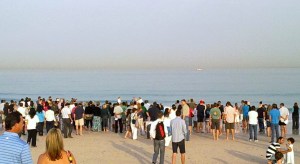
A glimpse of Boroko

A glimpse of Boroko

The majority of the people who attend Boroko are local residents. The ladies come to church in their brightly colored meri blaus (ladies blouse), adorned with a single flower fastened tightly in the back of their hair. Their dresses remind me of the Mexican housedresses worn in Texas, but with a more Polynesian flare. They look comfortable in the sweltering heat. The men come with their bilims secured across their bodies, around their necks or strapped across their foreheads. These satchels are woven from tree bark. Their color and pattern indicate their village of origin. I chide my husband that his skin tone and stature are clear indicators he is not a local resident, but his Fossil canvas bag helps him fit right in. Many of the worshippers come to church without shoes. I thought this strange at first, but God prompted some sweet memories of my own childhood when I practically never wore shoes in the summer, and of my dear sweet Mother, who loved to tell me about walking barefoot to church when she was a young girl. Once again, I felt connected to something familiar.

Brother Joshua—the older, and Pastor Julian—the younger, lead the congregation. They are both local residents with strong ties to the community.

Joshua is a diminutive, raspy-voiced, honest preacher. In heavily accented English, he teaches the truths of God’s word. His messages are often tailored to the specific troubles of his people and his country with the reminder that trouble is common to us all, regardless of our circumstances. He always points us back to God for His counsel. Joshua is a living example of 2 Timothy 4:7 as he makes his way to the finish line. Julian is tall – he towers over most of the New Guineans in his midst. His strength is in his experiences and his story telling. Hearing him speak about the sufferings and victory over dark, supernatural activity encountered by Christians in this region makes the threat very real. He has a heart for the youth of this congregation and it is obvious he is dedicated to mentoring the next generation. Both Joshua and Julian are welcoming of all who come to worship with them. I am thankful for God’s provision.

My search for a church home away from home was driven by my desire to be part of the body of Christ in my new surroundings. This longing for community brought to mind the exhortation in Hebrews 10: 24-25, “And let us consider how we may spur one another on toward love and good deeds, not giving up meeting together, as some are in the habit of doing, but encouraging one another—and all the more as you see the Day approaching.” (Hebrews 10:24–25, NIV) On an experiential level, I completely understand this counsel now. On the outside I look different from most people in my church in PNG, but on the inside, I’m much the same. I reach for the bond of fellowship wherever I am because all my homes on this Earth are temporary. I want to spur others on, encouraging them as we await His glorious coming. In this season of my life, I’m doing it with the people of Boroko.

“Jesus, O your name it is very sweet to me

Sweet, sweet, sweet, Jesus, O

Your name it is very sweet”
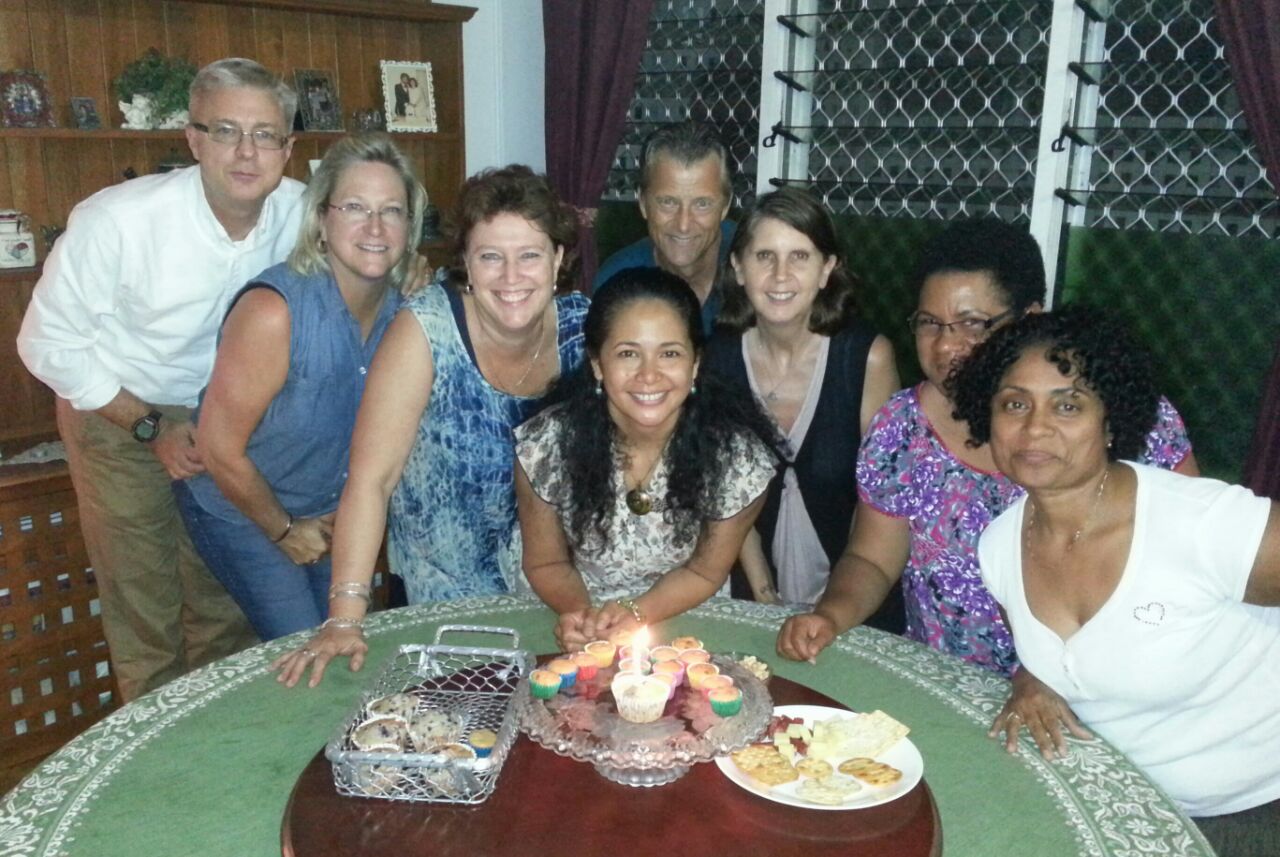
God's provision of fellowship

God’s provision of fellowship
Posted in Blog Entries | Tagged , , , , , , , , , | 2 Comments

A Psalm for the Expatriate

Where can I go to escape Your Spirit? Where can I flee from Your presence? If I go up to heaven, You are there; if I make my bed in Sheol, You are there. If I live at the eastern horizon or settle at the western limits, even there Your hand will lead me; Your right hand will hold on to me.” (Psalm 139:7–10, HCSB)

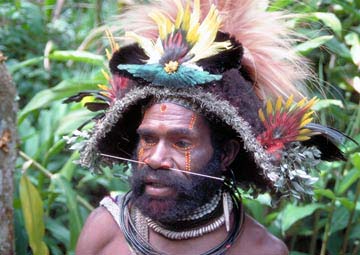
When we told friends we were moving to Papua New Guinea, many said, “Now, where is that again?” I remember my mother saying, “Isn’t that where the head hunters live?” One friend sent me a photo of a Huli tribesman she found on the Internet and, in jest, asked if he was to be my new neighbor. I knew I was headed to a strange and distant place. I wondered if I would also feel distant from God – something I had experienced before.

Was this to be my new neighbor?

Was this to be my new neighbor?

Early in my Christian life I struggled with my sense of God’s presence. He seemed detached, like I didn’t really know Him. I felt like He was a stern, judging perfectionist and that I could never do enough to please Him. My ideas about God gained a foothold in my unsaved life and it wasn’t easy to shake my misconceptions. Many of my Christian friends have relayed the same experience to me. Without the Holy Spirit , our thinking is disproportionately affected by our temperament, personality and especially our relationship with our earthly fathers. As for me, I had to learn how to have a right relationship with God. Crucial to my learning was a proper understanding of one of God’s incommunicable attributes, His omnipresence. I came to know that whether He felt close or far away, He was in fact, present everywhere, transcending space and time, and even if I tried, I could not escape His Spirit or flee from His presence. The mercy and grace I found through the study of His word in those early years changed how I viewed God the Father. It was a hard-fought battle, but like many spiritual struggles, it was necessary for me to gain a new foothold in my thinking.

As I’ve grown in my Christian walk, God has continued to refine my view of His omnipresence. Becoming an expatriate challenged my perceptions again when I first moved abroad three years ago. To my surprise, I discovered that my American environment largely shaped my thoughts about God’s presence in other lands. Statements like, “you won’t be able to worship there” or “there aren’t any Christians there” or “it’s a Godless country” had great influence on me. These views were well-intentioned, but not accurate. I came overseas with the skewed perception that God wasn’t really present in the rest of the world, or where I was going anyway. What a humbling experience it was for me to learn that God was quite alive and very active in the Middle East. How silly of me to think otherwise, considering that, well…you know, it was the Middle East.

God quickly made His presence known in my first days in my new home in Papua New Guinea. Those days were blessed with the formation of friendships founded on a shared belief in Christ. More than anything, I see evidence of God’s omnipresence in His people He has placed all over the Earth. They are everywhere – He is everywhere.

You may feel God is distant, or quiet in your own life. You may struggle to see any presence of Him in your world. It helps to remember the words of the psalmist, ‘whether in heaven or Sheol, in the east or the west, You hand will lead, Your hand holds on’.

Posted in Devotional Essays | Tagged , , , , , | Leave a comment

The Watcher


Mother/Daughter

         2 Corinthians 5

“Absent from the body, present with the Lord”


The Watcher

She always leaned to watch for us,

Anxious if we were late,

In winter by the window,

In summer by the gate;

And though we mocked her tenderly,

Who had such foolish care,

The long way home would seem more safe

Because she waited there.

Her thoughts were all so full of us,

She never could forget!

And so I think that where she is

She must be watching yet,

Waiting till we come home to her,

Anxious if we are late–

Watching from Heaven’s window,

Leaning from Heaven’s gate.

Margaret Widdemer

Leaves of Gold

1948

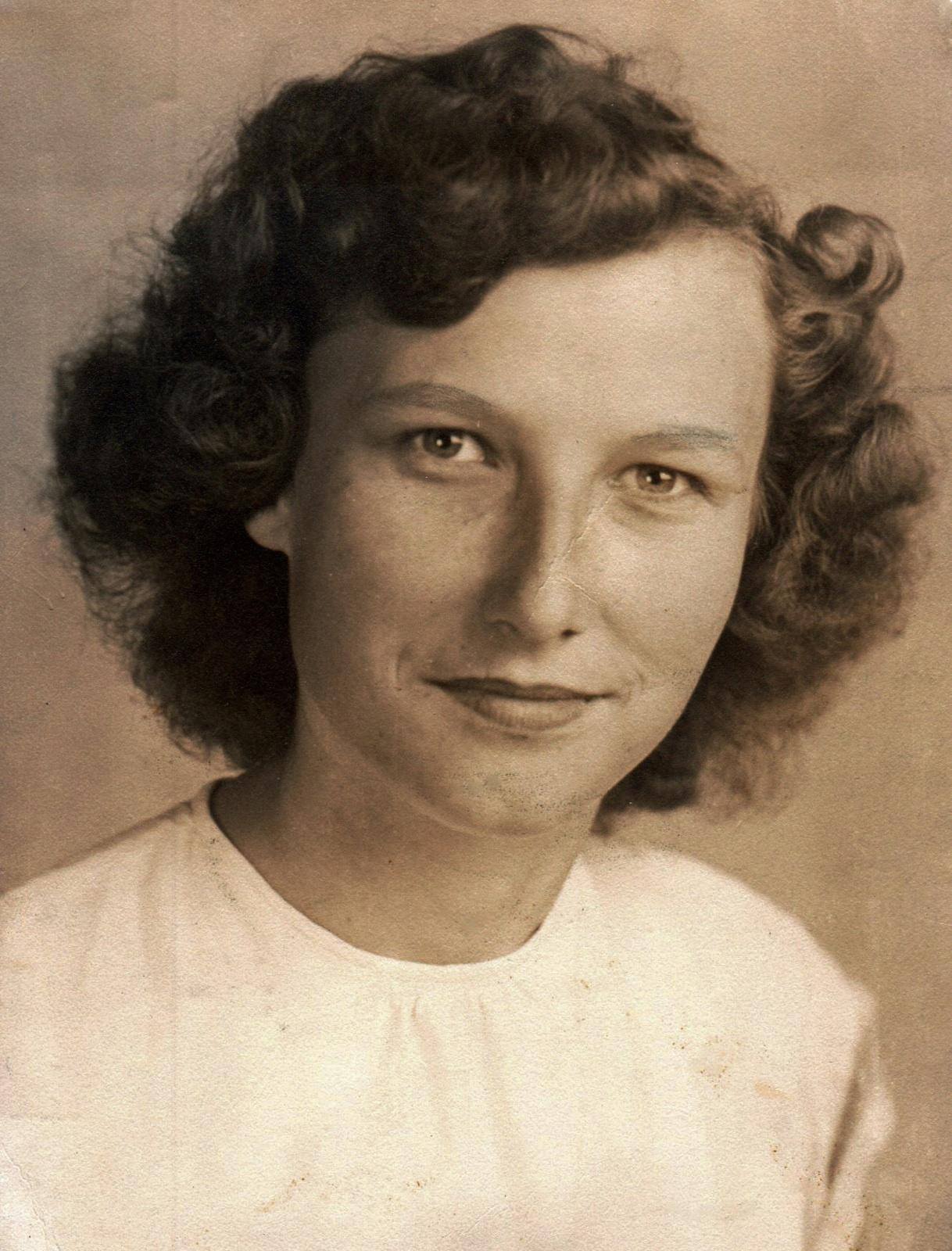
In loving memory of my sweet Mother, Mae Walton West

December 24, 1931 – July 1, 2013

1064631_10100366752217485_65251424_o

Posted in Blog Entries | Tagged , , , , , , | 2 Comments

Memorial Day – What Legacy Will You Leave?

Matthew 16:25–26 (HCSB) — 25 For whoever wants to save his life will lose it, but whoever loses his life because of Me will find it. 26 What will it benefit a man if he gains the whole world yet loses his life? Or what will a man give in exchange for his life?

I’m fortunate to have the fellowship of women in Papua New Guinea who desire to study God’s word. We recently had a discussion on the type of legacy we want to leave behind when we die – What would we most like people to remember about our life and ministry to others? Replace my name with yours and ask yourself today, how would you like this sentence to read?
Shirley was most beloved for the way she…

It’s a bit intimidating isn’t it? For me, it was a call right to the heart. How do I want people to remember me?

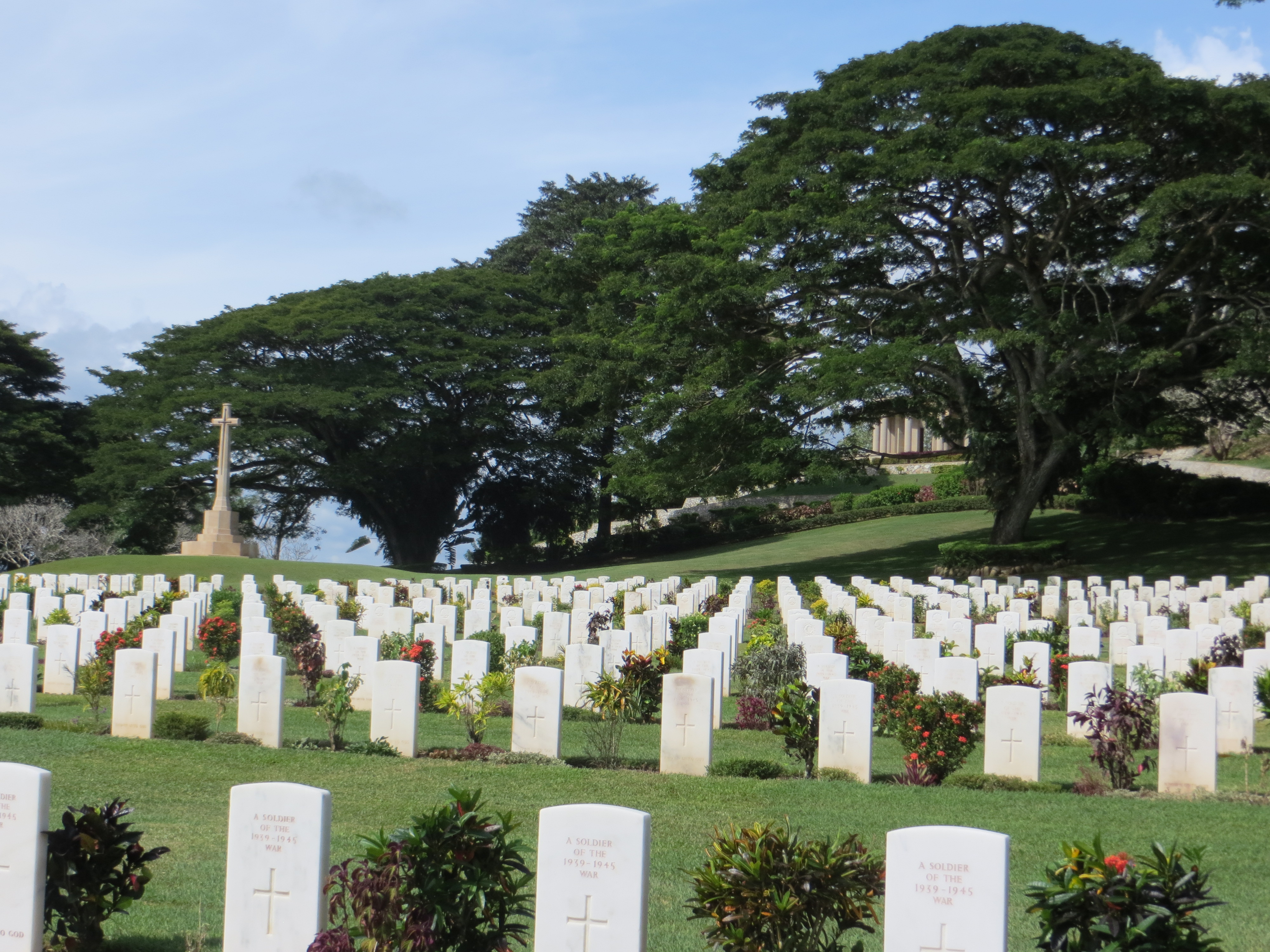
Bomana War Cemetery Papua New Guinea

Bomana War Cemetery
Papua New Guinea

As I contemplated this question, my thoughts turned to my recent visit to Bomana War Cemetery in Port Moresby, PNG. Located near the end of the Kokoda Track, Bomana’s serene and beautifully manicured grounds reminded me a bit of the American cemetery in Normandy. Both are respectful tributes to those who fought and died during World War II. Bomana honors the Australians and other Allied soldiers who lost their lives defending New Guinea from the Japanese on the Pacific front. The rows and rows of perfectly aligned headstones speak of the lasting legacy of the soldiers buried there. Some are a family’s testimony of their loved one’s character, courage and devotion to God. Many simply say, “Known Unto God”, three words that speak volumes about the importance of who really knows their legacy.

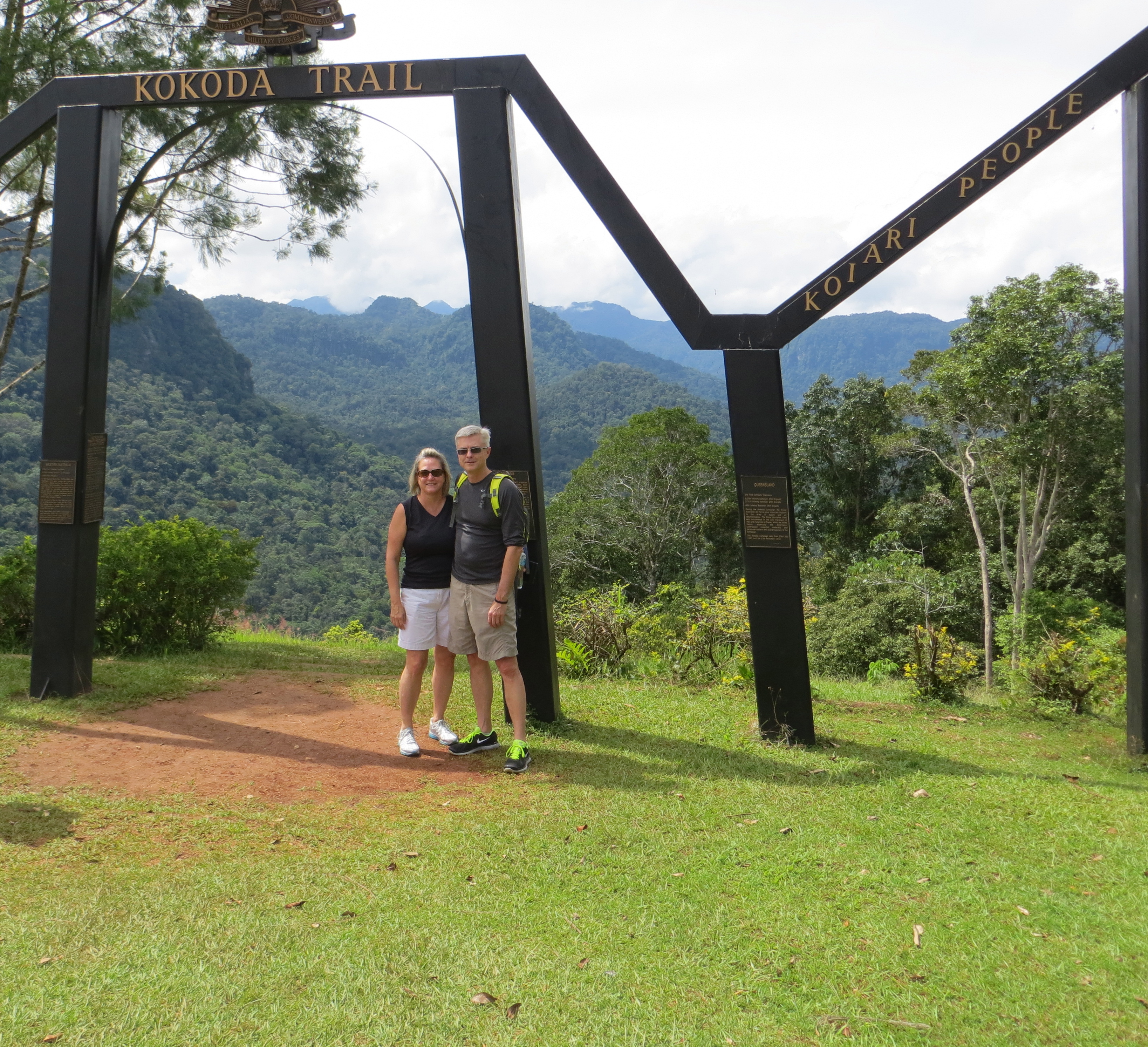
Kokoda Trail Head Segeri, Papua New Guinea

Kokoda Trail Head
Segeri, Papua New Guinea

This past weekend the United States observed Memorial Day. It is also a time of remembering the legacy of those who have lost their lives in defense of liberty and freedom for my home country. I was able to watch my home church’s live webcast that took place on Sunday night and I was touched by my pastor’s recognition of the individuals and their families who served and died to keep us free. It was especially poignant for me since, by the grace of God, I have a loved one on the way home from a foreign battlefield. A loved one who lives, yet has seen and experienced the loss of his brothers-in-arms, and knows first hand the importance of their legacy left behind.

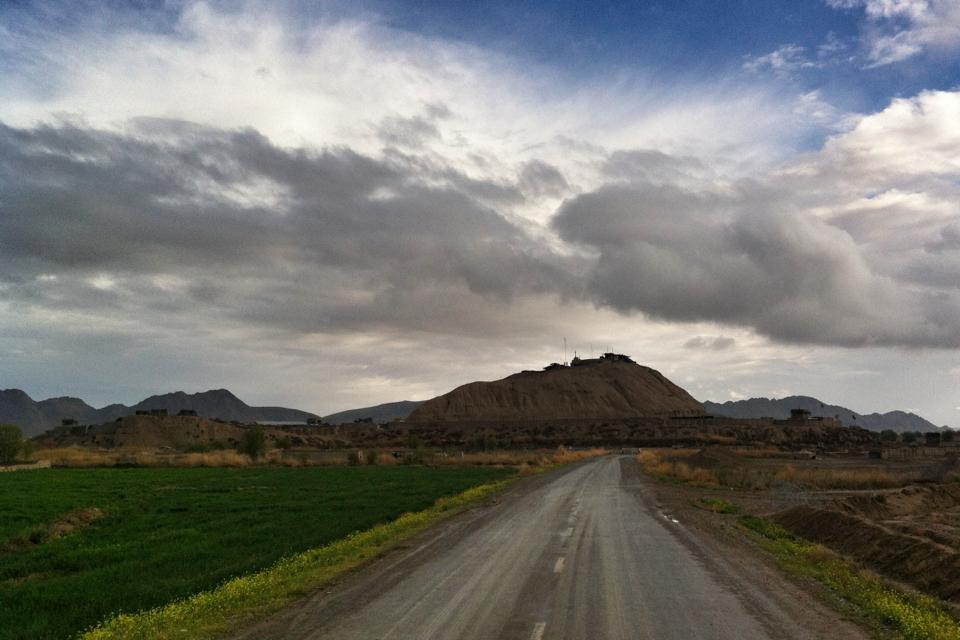
The Outpost at Sperwan Ghar Afghanistan

The Outpost at Sperwan Ghar
Afghanistan

I do not pretend to know the validity and purpose of war in God’s sovereign plan today. It is something I continue to ponder. I know only that we live in a world cursed by fallen humankind and enslaved by an evil tyrant (Romans 8:18-25). Even so, I also know that courage and righteousness abound in the brave actions of many who declare their devotion to Christ – on and off the battlefield.

Memorial Day made me think a lot about my own legacy to my family, my community and the kingdom of God. More than anything, this is how I would like my sentence to read:

Shirley was most beloved for her courage in the face of trial, her wisdom in rightly dividing the word of truth, her devotion to her family and most of all, her devotion to Christ.

What legacy will you leave?

Posted in Devotional Essays | Tagged , , , , , , , | Leave a comment

An Alien Arrival in Papua New Guinea

Greetings from Papua New Guinea!

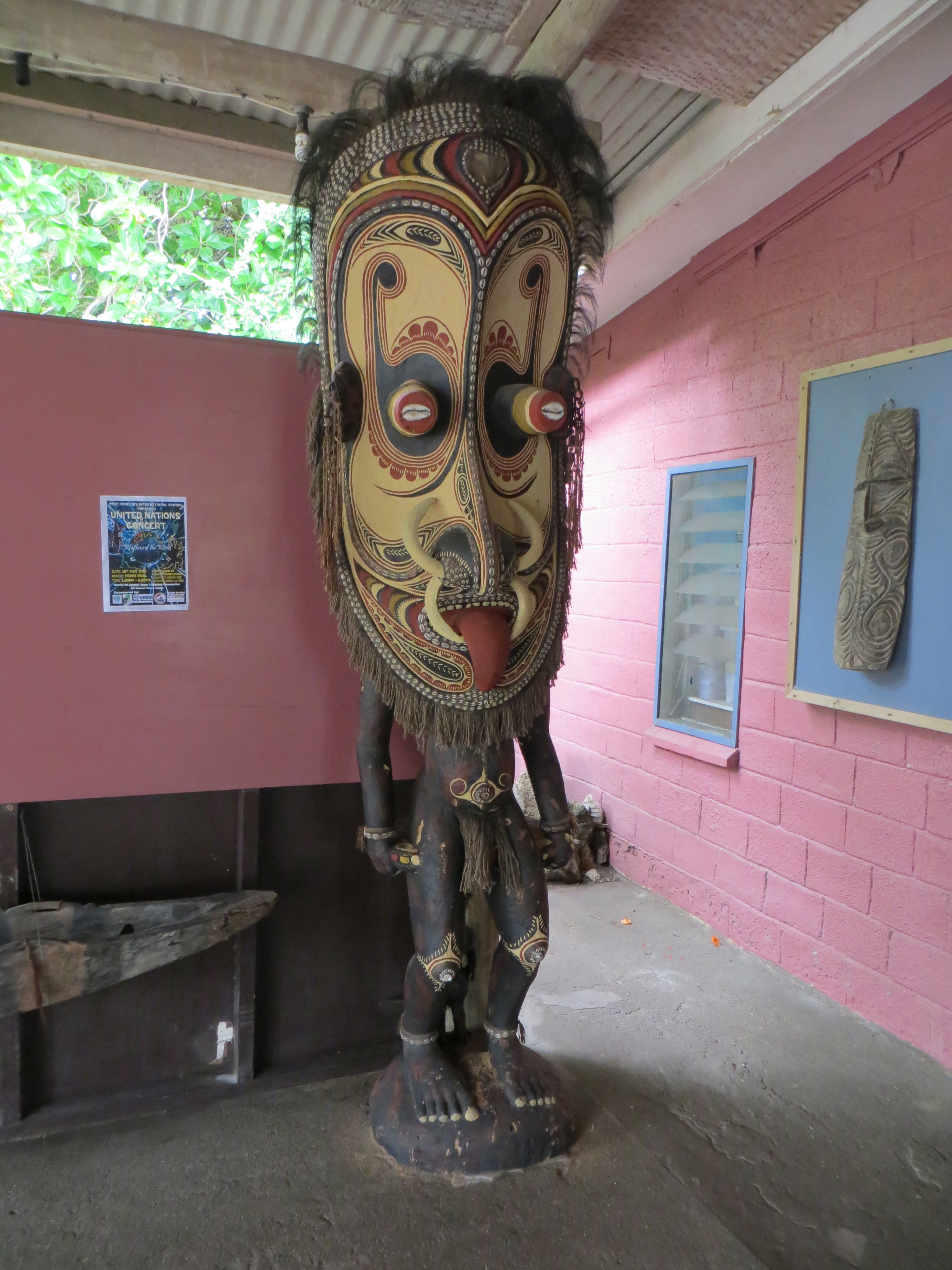
A bit of tribal art in Loloata, PNG

I arrived safely after a grueling 30 hours of travel from Houston that took me through Dallas, Brisbane, Australia and then to Port Moresby in Papua New Guinea. Someone told me the Dallas to Brisbane route is the third longest operating in the world today. I believe it. Despite the length, my journey was pleasant, quiet and uneventful, all things for which I am thankful. Clean lavatories and no weird odors also help make them more tolerable.

First glimpses of Papua New  Guinea

First glimpses of Papua New Guinea

My connection from Brisbane to Port Moresby was on Air Niugini – an interesting old plane that reminded me of my Piedmont Airlines days back in the 80’s. My Papua New Guinean attendant had to show me how to get the tray out of the armrest. I couldn’t remember how to do it. To her credit, she did not laugh at my privileged western incompetence, though I could read her thoughts. ‘First time flying this route?’ I tried not to think too much about the age of the plane and the type of pilot that would take a job in this isolated part of the world, mostly because I’ll be frequently flying that POM/BNE route and Air Niugini is the only game in town.

My fellow passengers were primarily guys headed to PNG for oil and gas related business. I recognized many of them from when we boarded in Dallas and I’d picked up bits and pieces of their conversations. There were also a few missionary families returning from leave. It was a reminder of the abundant missionary activity that takes place in this part of the world and a precursor of what God had in store for us here that I can’t wait to tell you about.

On our approach to Port Moresby I got my first glimpse of Melanesia. The little I knew about PNG and the surrounding seas and small islands comes mostly from the history books and what I know about World War II – the Coral Sea, the South Pacific, the Solomon Islands, etc.

I also remember hearing references to cannibalism and supernatural activity reported by missionaries who served in this region. Seeing it from above gave no hint of a past of sinking battleships and heads boiling in pots. It looked just like I remembered from one of my favorite movies, Swiss Family Robinson, beautiful and uninhabited.

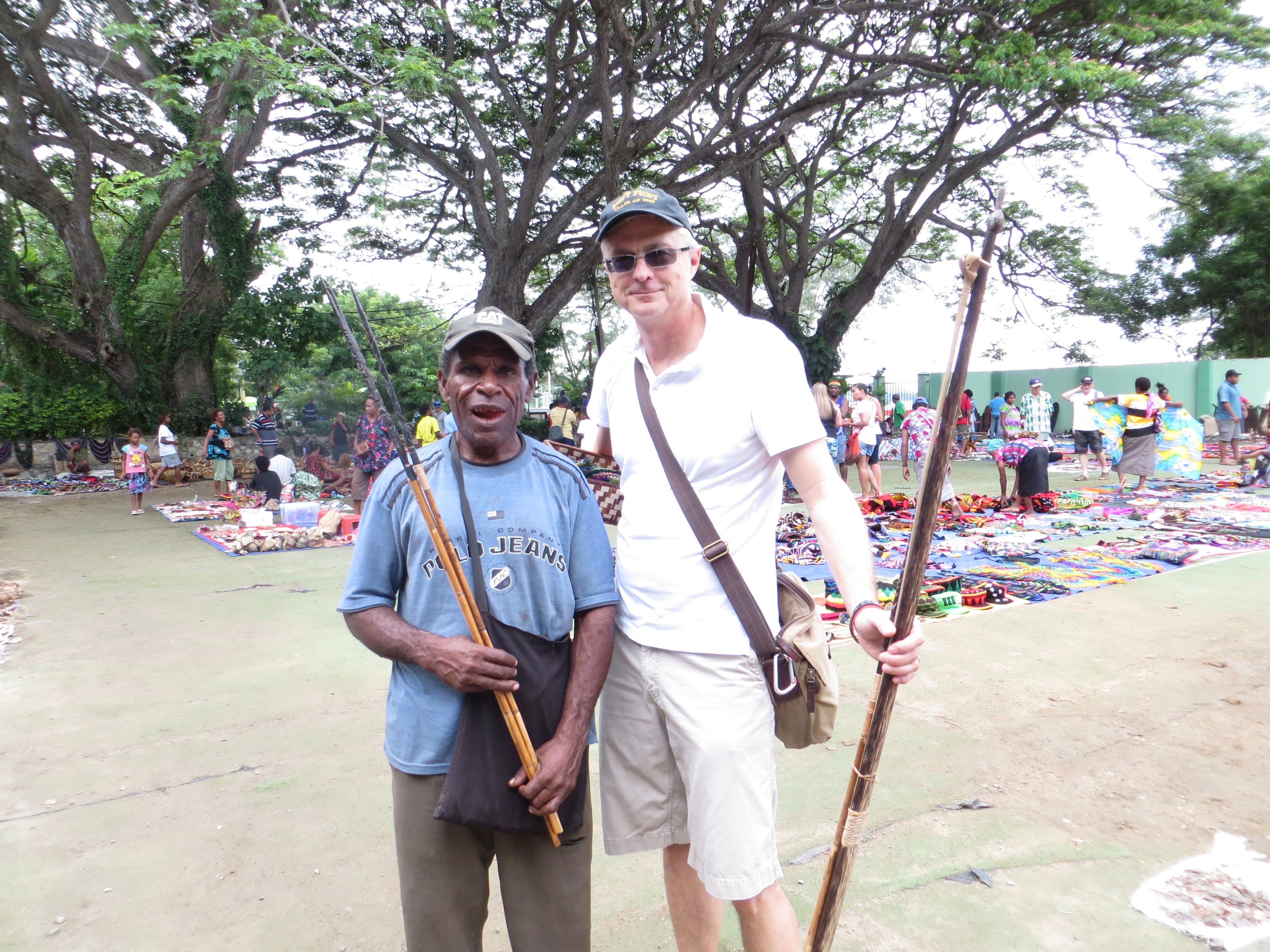
Ela Beach Market - Port Moresby A mighty bow from one who knows

Ela Beach Market – Port Moresby
A mighty bow from one who knows

PNG’s location in the South Pacific along the ring of fire means lots of seismic activity. Upon my arrival, Jeff greeted me with the news that there had been an earthquake in the Solomon Islands and that PNG was under a tsunami warning. For the second time in the last couple of years The Wizard of Oz came to mind, – “Toto, I have a feeling we’re not in Kansas anymore!”

As for those Air Niugini pilots, I have come to learn that many are former MAF (Mission Aviation Fellowship) pilots who lived and served in the highlands of PNG for many years. Yes, I may well have been traveling with some very special earthly angels who knew exactly what they were doing. Peace be with them.

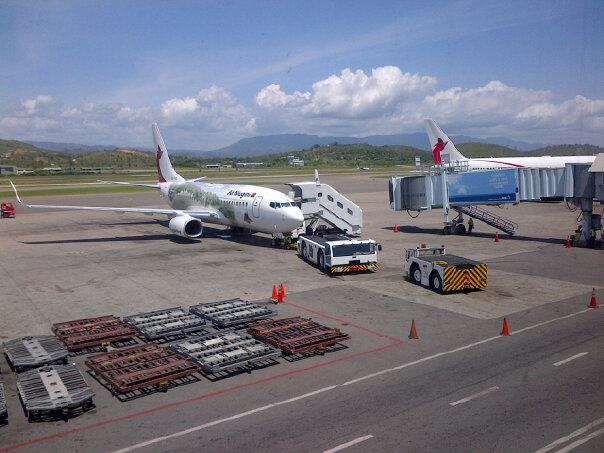
Air Nuigini - Jackson International Airport, Port Moresby, PNG

Air Niugini – Jackson International Airport, Port Moresby, PNG

Warm regards ‘til next time…

Posted in Blog Entries | Tagged , , , , | Leave a comment

Alien Abroad ~ Saying Goodbye to Dubai

Dubai/Houston

Dubai/Houston

On January 11, 2012, I boarded Emirates flight 211 – Dubai to Houston, probably for the last time. The inevitable relocation notice came in October that my husband and I were moving on to another assignment in Papua New Guinea. I couldn’t believe my time in Dubai was really at an end. In December, we shared our last Christmas in the Emirates and quickly got down to the business of household inventories, walk-throughs, closing accounts, canceling visas and saying our goodbyes – it was pretty overwhelming. So, as I settled in for the sixteen-hour flight I was thankful for the time to reflect on this most recent change in my life.

The ultimate driving experience

The ultimate driving experience

I consider myself fortunate for the opportunity to reside in the Middle East. Dubai, in particular is a place where everything is billed as bigger, better and faster – it makes living there a lot of fun. From the top of the Burj Khalifa to the dancing fountains at Dubai Mall to the desert safaris, I had some incredible once in a lifetime experiences. Just driving Dubai’s main thoroughfare, Sheikh Zayed Road (affectionately know as Sheikh Zed) was an adventure unto itself. There is however, one aspect of my life in the Middle East that eclipses all others, my surprising journey as a Christian expat living in an Islamic country.

Before our move in 2010, several people warned me that I might have to be very secretive about my Christian faith. I didn’t know if I could worship openly or if I would even be able to participate in bible study. I really wanted to continue some of the work I’d been doing for my pastor in Houston but I was advised not to ship my hardback research library for fear my books might be confiscated. I hoped I could rely on my electronic resources and social media and that my favorite internet study sites weren’t blocked. I heard stories from Christians working in the region of monitored emails, phone conversations and even conversations in public places. Some talked of passports being taken and visas cancelled on charges of proselytizing. I knew had to step lightly because I was in Dubai because of my husband’s employment, something I certainly didn’t want to put at risk.

In reality, I found there was an element of truth to all the things I’d heard about, but the situation was not near as dire as I’d imagined. To be sure – living under Sharia law called for wisdom and discernment in much of what I said and did. And the level of spiritual warfare I encountered caused me to trust Christ as never before. But in the midst of an environment hostile to the gospel, God prepared my path. He showed me how to live, serve and glorify Him as an alien abroad. As a result, I experienced a rich life of faith and several rewarding ways to minister in the name of Christ. Does that sound like a familiar turn of events to you? It should. I know that I didn’t have to look far in scripture to find examples of God’s people living as aliens in foreign lands. Abraham, Joseph, Esther, Ruth and Daniel are some of the most notable that lived the expat life. They had no permanent home, no citizenship and no real rights, yet there is another common thread that runs through their stories. In their faithfulness to God, they were uniquely positioned to become very important parts of the amazing tapestry of God’s story for mankind. The same is true for you and me. By His power we too are able to serve and glorify His name, no matter where we are, no matter how futile our circumstances may seem.

I came to Dubai fearful and uncertain about what I would experience in regards to living out my faith. I came with assumptions and preconceived notions about the restrictions of living in an Islamic country. I left with a new understanding of the universal power of Christ and a heightened awareness of the impact of being an American Christian abroad. In the Middle East, where political and religious tensions are so intertwined, I was able to find my way as a faithful follower of Christ. My life was enriched by the fellowship of other Christian brothers and sisters from all over the world and what we were able to do together.
I look forward to sharing my experiences with you in the months to come – what I’ve come to know, and what I’ve yet to learn as an alien abroad.

If you are a Christian, you are not a citizen of this world trying to get to heaven; you are a citizen of heaven making your way through this world. ~ Vance Havner

View from my new home ~ Papua New Guinea

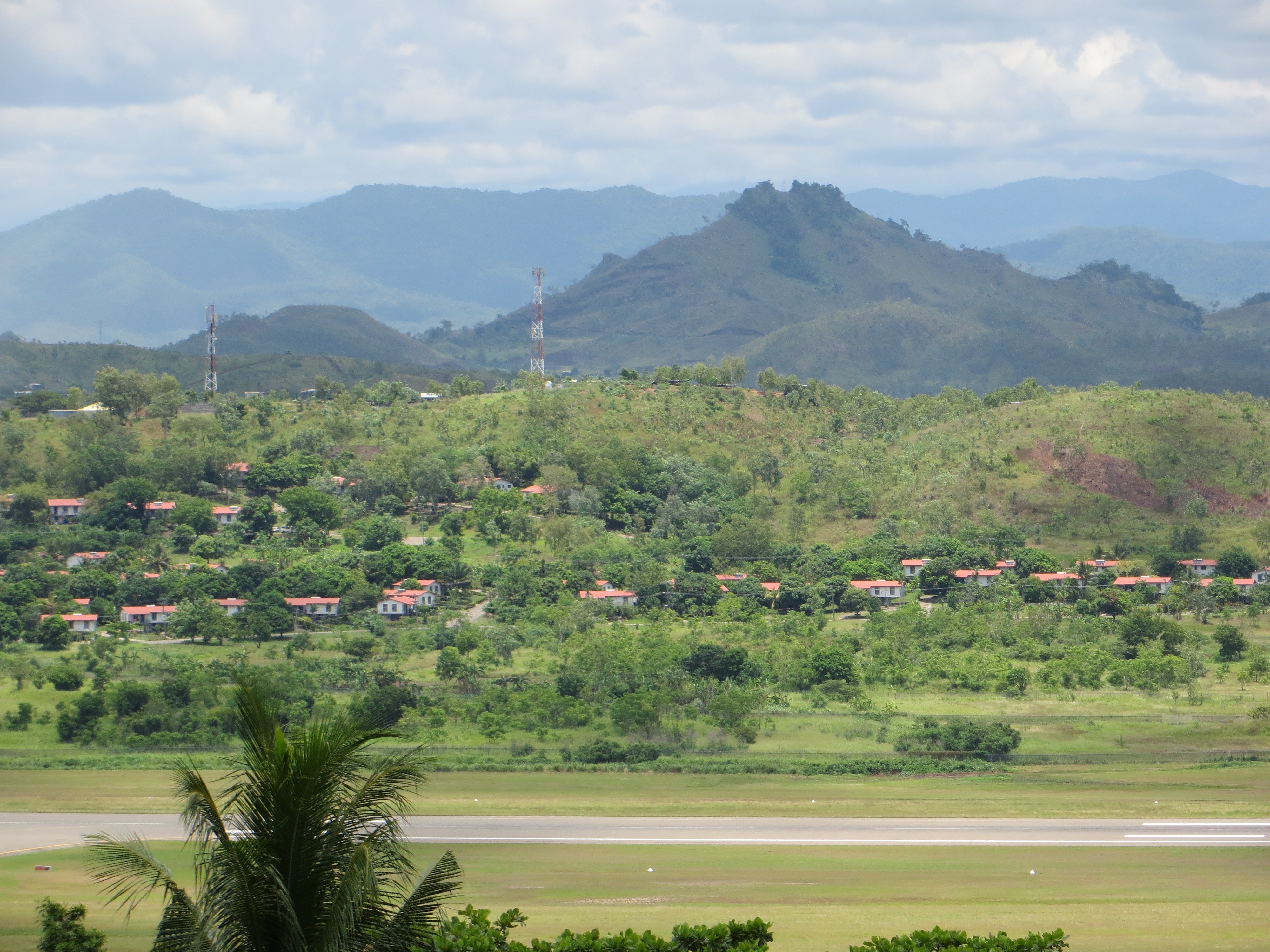
View from my new home ~ Papua New Guinea

Posted in Blog Entries | Tagged , , , , , , , , | 2 Comments

What is the fear of God in a God-Fearer?

I recently heard a story about a large international company conducting job interviews in a remote area specific to one of their projects. When local interviewees were asked about their goals in life, some replied, “I want to be a God-fearing Christian.” Missionaries are active in the region and, as is often the case, the Christians there are open and uninhibited about their devotion to Christ. In the secular world, their response to the question seems oddly out-of-place for two reasons. First, those who are unfamiliar with Christian rhetoric most likely do not interpret this statement correctly. They may think, ‘this person wants to be afraid of God? What kind of goal is that?” Secondly, would you make that statement in a job interview? I hate to admit it but I doubt that I would.

God-fearer – the nuances of the term can make the meaning confusing. What exactly is this fear of God – in a God-fearer? No doubt it can mean terror or dread in the face of God’s wrath, but perhaps the best sense of the biblical idea of the fear of God is “a genuine faith expressed in, and animated by, a reverential awe.”[1] The fear of God inspires honor and praise from David (Psalm 22:23); it prolongs life (Proverbs 10:27) and is the beginning of wisdom (Proverbs 9:10). Mary proclaims the generational effect of His mercies on those who fear Him (Luke 1:50); it is a source of joy (Psalm 2:11) and a fountain of life (Proverbs 14:27).  But most importantly, the fear of God can also lead one to salvation.

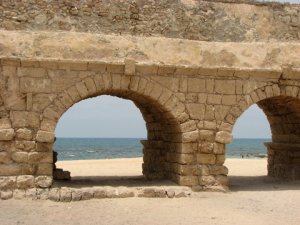
Remains of the Aqueduct leading to what was the beautiful city Caesarea on the Mediterranean, Israel. Photograph-Shirley Ralston, June, 2009

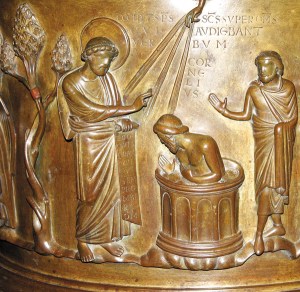
Probably the most well known story of a God-fearer in the scriptures is that of Cornelius in Acts 10. Cornelius was a Roman Centurion stationed in beautiful Caesarea. He was a leader of men (some scholars say as many as 6,000 soldiers were under his command); he was powerful, influential, and a devoutly religious God-fearer. What an unlikely combination. A Gentile soldier, a Roman, who prayed continually and gave alms, drawn to the monotheistic God of the Jews! Cornelius’ receptiveness to the natural revelation described in Romans 1:20 made him ripe for God to use him and ultimately he and his entire household were saved. He and Peter are participants in yet another double vision event (remember Ananias and Saul in Acts 9?). God gives them both visions that culminate in the revelation that salvation is also for the Gentiles. This episode hints at the explosion of faith that lay ahead because of the continued spread of the Gospel through The Way.

A turning point in the Jesus movement, Peter baptizes the Roman centurion Cornelius, the first non-Jewish Christian, in Jerusalem (Acts 10), as shown in one of five baptism scenes on a 12th-century baptismal font in St. Bartholomew’s Church in Liège, Belgium. Image: Jean-Pol Grandmont.
http://www.biblicalarchaeology.org/daily/biblical-topics/new-testament/the-origin-of-christianity/

In Acts 9 we learned about an ordinary man (Ananias) and a murdering religious zealot (Saul), who were both used by God to change the course of human history. In Acts 10 we learn about a powerful Roman soldier and an impulsive fisherman chosen to spread the Gospel to the world. They were all God-fearers, each responding to the awesomeness of the Almighty. It was the number one thing in all their lives and they didn’t care who knew. And today, there are guys interviewing for jobs in one of the most remote regions of the world whose goal in life is to be a God-fearing Christian! They are the spiritual bounty of the spread of the gospel to Judea, Samaria and the ends of the earth. Amazing!

Lord, show us how to hold you in such reverential awe that we are bold witnesses of your glory. Give us the courage to fear God, not man. Amen.


[1] Elwell, W. A., & Comfort, P. W. (2001). Tyndale Bible dictionary. Tyndale reference library (479–480). Wheaton, IL: Tyndale House Publishers.

Posted in Devotional Essays | Tagged , , , , , , , , , , | Leave a comment

Ripples of a Revolution

teaching, fellowship, breaking bread and prayer


When I look around our worship service on Fridays, I see a gathering that has come full circle since the day of Pentecost 2000 years ago. For many of the worshippers, the nations represented in Acts 2:9-11 are their home countries today. Like the followers of The Way, we are from “every nation under heaven” and like them; our identification with Christ transcends culture, family, nationality and politics. The Spirit of God has sovereignly linked us in a very unique manner. The Apostles and the 3,000 souls added to their numbers in Acts 2:41 became part of a worldwide revolution. Amazing isn’t it? In a way, we are the spiritual descendants of those first believers, as their


ripples from the revolution continue

revolutionary acts continue to ripple throughout the world until Christ’s return. Do you think of yourself as being part of a revolution? Historically, members of a revolution unite under a symbol that identifies them with their movement. French Revolutionaries were known by the distinct, brimless “Liberty Cap”, originally worn by freed Roman slaves.The struggle for freedom in the American Revolution was symbolized by the colors red, white and blue. Our revolution is also about freedom…freedom from sin and death and freedom in Christ. It also has a special symbol, believer’s baptism – an outward expression of the inward change Christ has wrought on our hearts.

Peter said to them, “Repent, and each of you be baptized in the name of Jesus Christ for the forgiveness of your sins; and you will receive the gift of the Holy Spirit.” (Acts 2:38)…“So then, those who had received his word were baptized; and that day there were added about three thousand souls.” (Acts 2:41)

A very special baptism in the Arabian Sea
Fellowship of the Emirates
That must have been an incredible scene, thousands of people receiving believer’s baptism, publicly identifying themselves as followers of The Way. It was a natural and regular occurrence in the early church. There didn’t seem to be much debate about how or when, just a desire to be identified with a new revolution. Have you been baptized since becoming a believer in Christ? If not I encourage you to do so. I can tell you from my own personal experience it is awesome. I’ve seen baptisms in rivers (including the Jordan River), pools, lakes and the church baptistry. In Dubai, baptisms often take place in the Arabian Sea. It is always a joyous experience. It is a great reminder that the ripples of the revolution continue. View: A very special baptism at Houston’s First Baptist Church

A very special baptism in the Jordan River

“buried with Christ in baptism, raised to walk in newness of life.”(Romans 6:4)


Posted in Devotional Essays | Tagged , , , , , , , , , | Leave a comment

The Perfect GPS

The Way that Changed the World: Acts 1-2:13
The Perfect GPS

It is in the deepest darkness of the starless midnight that men learn how to hold on to the hidden Hand most tightly and how that Hand holds them; that He sees where we do not, and knows the way He takes; and though the way be to us a roundabout way, it is the right way. ~A.T. Pierson[1]

The ultimate driving experience

Before I moved to Dubai, I heard many expatriate tales of what it was like to drive in the Emirates. It didn’t scare me. I carpooled and commuted the freeways of Houston, Texas for over 25 years, including a daily pass through one of the most dangerous interchanges in the country. I felt confident I could navigate driving conditions in modern Dubai. How bad could it be, I thought. It didn’t take me long to realize that I was in a new and different world. The navigation rules I always depended on no longer applied. In Dubai, north isn’t really north, maps are unreliable, and freeway signs are confusing. You know the lines that mark roadway lanes? Turns out they are really just suggestions, so are speed limits. Sheikh Zayed Road, our main thoroughfare, is a playground for Formula 1 wannabes. Sometimes, a destination just across the street is a 15-minute trip through several U-turns and a couple of roundabouts. What do you do when the GPS lady tells you to go left when you really need to go right? Necessity fostered a search for an easier and more reliable method of getting around. I learned to ask people, “Can you tell me the way?” In response I get good directions based on landmarks, like  – “take Jeremiah Beach Road towards the Burj Khalifa, look for the big flag and make a right next to the pink building before you get to the large roundabout”. Not what I was used to but very effective nonetheless. I had to learn a new way to navigate, different from what I knew, and I needed someone to guide me.

I needed a different way to navigate Dubai

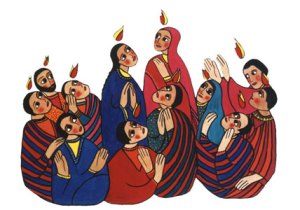
I found myself thinking about Luke and The Acts of the Apostles the other day as I was once again navigating my way around Dubai. Acts is also a tale of navigation. Luke records the birth pangs of the early church through the experiences of the Apostles as they learn to live in their newfound faith. For them, the law was the voice from the GPS that had always told them where to go and how to get there. When Jesus came, He brought an end to the law. With the end of the law came a new voice from the GPS, Jesus’ voice, and a new way that was different from anything they had ever known. They learn to follow that voice and then suddenly…it was gone. After Jesus’ death and resurrection, He ascended into heaven, as the apostles stood there, watching Him go. Then, they are alone (Acts 1:9). I imagine they were frightened and confused at this turn of events, wondering if they were now to be without any guidance at all. But Jesus gave them one last bit of direction, and a promise, before His departure.

“Gathering them together, He commanded them not to leave Jerusalem, but to wait for what the Father had promised, “Which,” He said, “you heard of from Me; for John baptized with water, but you will be baptized with the Holy Spirit not many days from now.”(Acts 1:4-5)

The Apostles receive the Holy Spirit – the perfect GPS

I believe the apostles clung to this promise in the interim days that followed. It seems they clung to each other as well. How? They remained unified and devoted to prayer (Acts 1:14), devoted to the scriptures as well (Acts 1:16) and finally, they led by forging ahead. (Acts 1:24-26). In Jesus’ bodily absence they keep moving, confident He would keep His promise and invigorated at what was to come. Fifty days later, Pentecost is the setting when the apostles receive a “navigation system” that surpasses all others.[2] The Holy Spirit of the living God comes and indwells them and all believers in Acts 2:1-4. Now the voice from the GPS is a permanent, internal guide that will show them the way, as they become The Way[3] in Jerusalem, Judea, Samaria and the ends of the Earth.

The Holy Spirit that indwelt believers on that Pentecost so long ago is the same Holy Spirit that indwells every believer today. We have access to the same power, the same voice, the same courage, and the same guidance. Trouble is, our perfect navigation inhabits an imperfect body. We tend to rely on ourselves way too much, thinking we can outsmart the navigation system and find an easier way, without tapping into the resource that God has so graciously given us. How much more confidence and peace would we have if we fully trusted that voice to tell us the way. I want to listen more closely, do you?

Give me a revelation, Show me what to do
Cause I’ve been trying to find my way, I haven’t got a clue
Tell me should I stay here, Or do I need to move
Give me a revelation
I’ve got nothing without You[4]

[2] Kistemaker, S. J., & Hendriksen, W. (1953-2001). Vol. 17: Exposition of

the Acts of the Apostles. New Testament Commentary (74–75). Grand Rapids: Baker Book House. The word Pentecost is derived from a Greek word meaning “fiftieth.” The Jews celebrated Pentecost as the Feast of Weeks on the fiftieth day after Passover (Lev. 23:15–16; Deut. 16:9–12). They also called it the Feast of Harvest (Exod. 23:16). Pentecost was a harvest festival when the Jewish people presented their first fruits of the wheat harvest. (Num. 28:26).

[3] Carpenter, E. E., & Comfort, P. W. (2000). Holman treasury of key Bible words: 200 Greek and 200 Hebrew words defined and explained (416). Nashville, TN: Broadman & Holman Publishers. The Greek term hodos means “road” or “way.” In the Bible, it was used in both the literal sense and in the spiritual sense—especially in the Gospel of John. Once the disciples followed this “way,” they were convinced that it was the only “Way” to God. This was their spiritual reality and their proclamation to the world. Indeed, the early Christians called their movement “The Way”—and that is how they were first known by outsiders (Acts 9:2; 18:26; 19:9, 23; 22:4; 24:14, 22).

Posted in Blog Entries | Tagged , , , , , , , | 1 Comment

C. S. Lewis Blog: Happy 75th Birthday to The Hobbit!


C. S. Lewis Blog: Happy 75th Birthday to The Hobbit!.

I first read the Chronicles of Narnia when I was 11 yrs. old. My brother had bought them as a gift for my younger sister, but somehow they found their way into my hands. I was totally taken in, from the first page to the last of the entire set.  Years later, the writings of C.S.  Lewis had a profound influence on my Christian life. They helped me to understand my world in theological terms. His books brought sense to much of my early doubts and confusion. Then, when the Lord of the Rings trilogy, by his dear friend J.R.R. Tolkien was made into film, I was again transformed. My family and I spent hours enjoying the enchantment and finding solace in the tales of bravery and friendship. I am amazed what God can do with the creative Christian mind, with the pen of Christian writers who can weave their faith into complex stories. Stories of unlikely heroes with a strange set of friends and even stranger foes, saving their world’s from evil domination. Hmm, I do believe I see some parallels, theologically speaking, on many levels. The Hobbit, which I also read as a young girl,  is about to be released in theaters. I can’t tell you how much I am looking forward to experiencing this fantastic tale once again. Happy Birthday Bilbo.

Has C.S. Lewis or J.R.R. Tolkien influenced your life? I’d like to know.


Posted in Uncategorized | Tagged , , , , , , , | 2 Comments